Hello, I'm

Prathamesh Solase

I see artificial intelligence as a tool to solve real human and planetary problems, not just a technology for automation. My vision is to build ethical, transparent, and scalable AI systems that deliver measurable impact in the real world. AI should work alongside humans, improving decision-making in areas like climate resilience, agriculture, and finance. I believe the future of AI lies in responsible deployment, guided by strong governance and public trust. My goal is to create AI platforms that scale from research to national and global impact.

Professional Experience

Founder & CEO

Phoenix Flame Quant
Pune, MH
  • Founded an AI quantitative trading firm focused on disciplined risk-managed decision systems.
  • Directed research integrating reinforcement learning, stochastic finance, and portfolio optimization.
  • Established institutional-grade risk frameworks emphasizing drawdown control and capital discipline.
  • Reinforced belief that robust judgment matters more than model complexity in high-stakes environments.

Board Member

Mauli Agro Tech
Indapur, MH
  • Providing board-level guidance on AI adoption and technology partnerships across large-scale agricultural operations in India and China.
  • Led deployment of AI systems reaching 10,000+ farmers, later recognized publicly by the Agriculture Minister.
  • Focusing on governance, scalability, and trust building in technology adoption, particularly in resource-constrained environments.

Board Member

Stable Industries Pvt. Ltd.
India
  • Providing board-level technology and product strategy leadership, focusing on long-term digital transformation and AI adoption across multi-plant operations.
  • Evaluating AI investment priorities and vendor partnerships across India and China.

AI Product Manager

Stable Industries Pvt. Ltd.
India
  • Built AI supply-chain engine β†’ 60% reduction in manual work and US$2M annual savings.
  • Developed LLM-based production intelligence platform, improving demand and defect forecasting 35%.
  • Implemented GPU-accelerated distributed inference architecture with FastAPI, supporting real-time AI workflows across plants.
  • Authored and deployed Responsible AI governance framework, ensuring transparency, safety, and traceability in production decisions.
Note: Resigned from the AI Product Manager role in Aug 2025; continue to serve as a Board Member.

Founder & CEO Acquired

HoloWorld Tech
India
  • Founded AR/VR + AI startup focused on industrial workflow digitization and workforce optimization.
  • Improved client productivity 35% using immersive visualization tools for training, inspection, and maintenance.
  • Scaled the startup to profitability within 18 months, secured 50+ enterprise clients, and achieved successful acquisition in 2023.
  • Led end-to-end company operations including product development, engineering leadership, enterprise sales, fundraising, and strategic partnerships.

Skills & Expertise

Artificial Intelligence & Machine Learning

Reinforcement Learning

Policy Gradient, PPO, RL Control Systems

Expert

Large Language Models

LLMs, Custom Model Training & Fine-tuning

Advanced

Deep Learning

CNNs, LSTMs, Transformers

Expert

Sensor Fusion & Predictive Analytics

Multi-modal data integration & forecasting

Expert

Optimization Algorithms

Markowitz, Kelly Criterion, Risk Control

Advanced

Quantitative Trading & Financial Engineering

Algorithmic & Quant Trading

FX, Commodities, Crypto, HFT Systems

Expert

Portfolio Optimization & Risk Management

Modern Portfolio Theory, Risk Metrics, VaR

Expert

PnL Modeling & Financial Engineering

Sharpe Ratio, Drawdown Control, Backtesting

Expert

Statistical Modeling & Time-Series Analysis

ARIMA, GARCH, Forecasting, Econometrics

Expert

AI Systems & Product Engineering

AI Product Strategy & Roadmapping

Market Analysis, GTM Strategy, Product Vision

Expert

End-to-End AI System Design

Research β†’ Deployment, Architecture, Scalability

Expert

Decision Intelligence Platforms

Business Intelligence, AI-Driven Decisions, Dashboards

Advanced

Scalable ML Pipelines & MLOps

MLflow, CI/CD, Model Monitoring, Versioning

Advanced

Programming & Frameworks

Programming Languages

Python, C++, SQL, JavaScript

Expert

ML Frameworks & Libraries

PyTorch, TensorFlow, Hugging Face, OpenCV

Expert

Backend & API Development

FastAPI, REST APIs, Microservices, Cloud

Advanced

MLOps & DevOps

MLflow, Docker, Git, CI/CD, Monitoring

Advanced

IoT, Robotics & Applied AI

IoT-Based Micro-Climate Monitoring

Sensor Networks, Real-time Data, Edge Computing

Expert

Real-Time Control Systems

Automation, Feedback Loops, PID Control

Advanced

Computer Vision for Agriculture

Defect Detection, Crop Monitoring, Yield Prediction

Expert

Robotics & Embedded AI

Embedded Systems, Autonomous Systems, Robotics

Advanced

AR/VR & Visualization

AR/VR Industrial Visualization

Unity, Workflow Simulation, Training Systems

Expert

AI-Driven Defect Detection

Quality Control, Anomaly Detection, Simulation

Expert

Leadership & Innovation

AI Product Leadership

15–40 member teams, Cross-functional R&D

Expert

Cross-Functional R&D Management

AI/IoT, Polymer Science, Agronomy, Electronics

Expert

Policy-Level AI Advisory

Ethical AI Governance, Responsible AI Policy

Advanced

Startup Founding & IP

Patents, Technology Commercialization, Funding

Expert

Public Impact & National Recognition

Prime Minister's Office Consultation

Invited to consult on national deployment of AI for Water reinforcement-learning system

Climate Resilience for 1M+ Farmers

AI for Water initiative benefiting farmers indirectly through climate resilience interventions

Agriculture Minister Demonstration

Demonstrated Foam AI innovation to the Agriculture Minister of India (2025)

Responsible AI Policy Creation

Authored university's first Responsible AI Policy as AI Ethics Committee head at MIT ADT

40-Member Analytics Task Force

Led 40-member analytics task force for ethical election sentiment modeling

Green Habbit Initiative

Founded initiative facilitating 50,000+ tree plantations

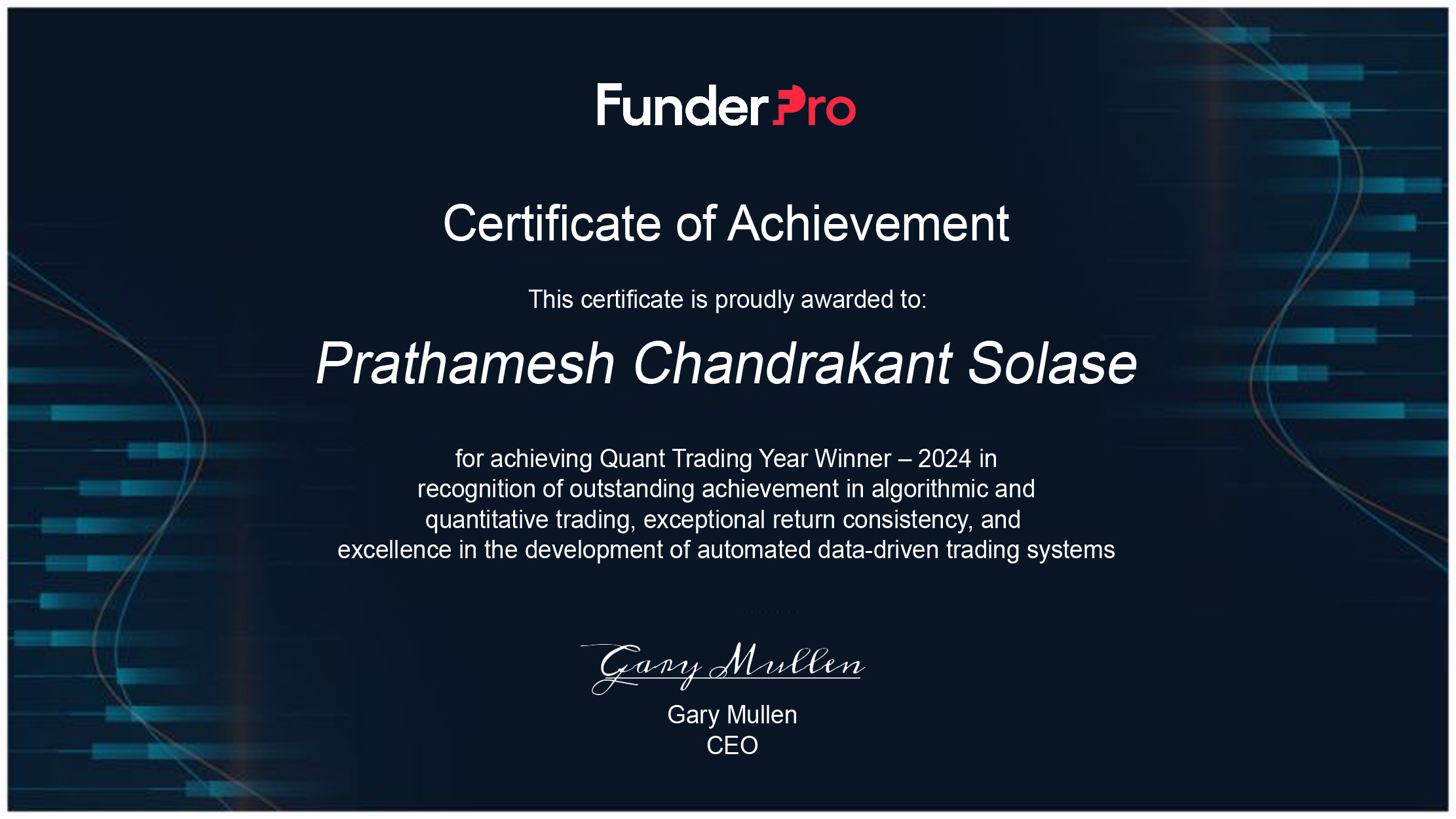
Quant Trading Year Winner (1st Place)

2024 - FunderPro Global Competition

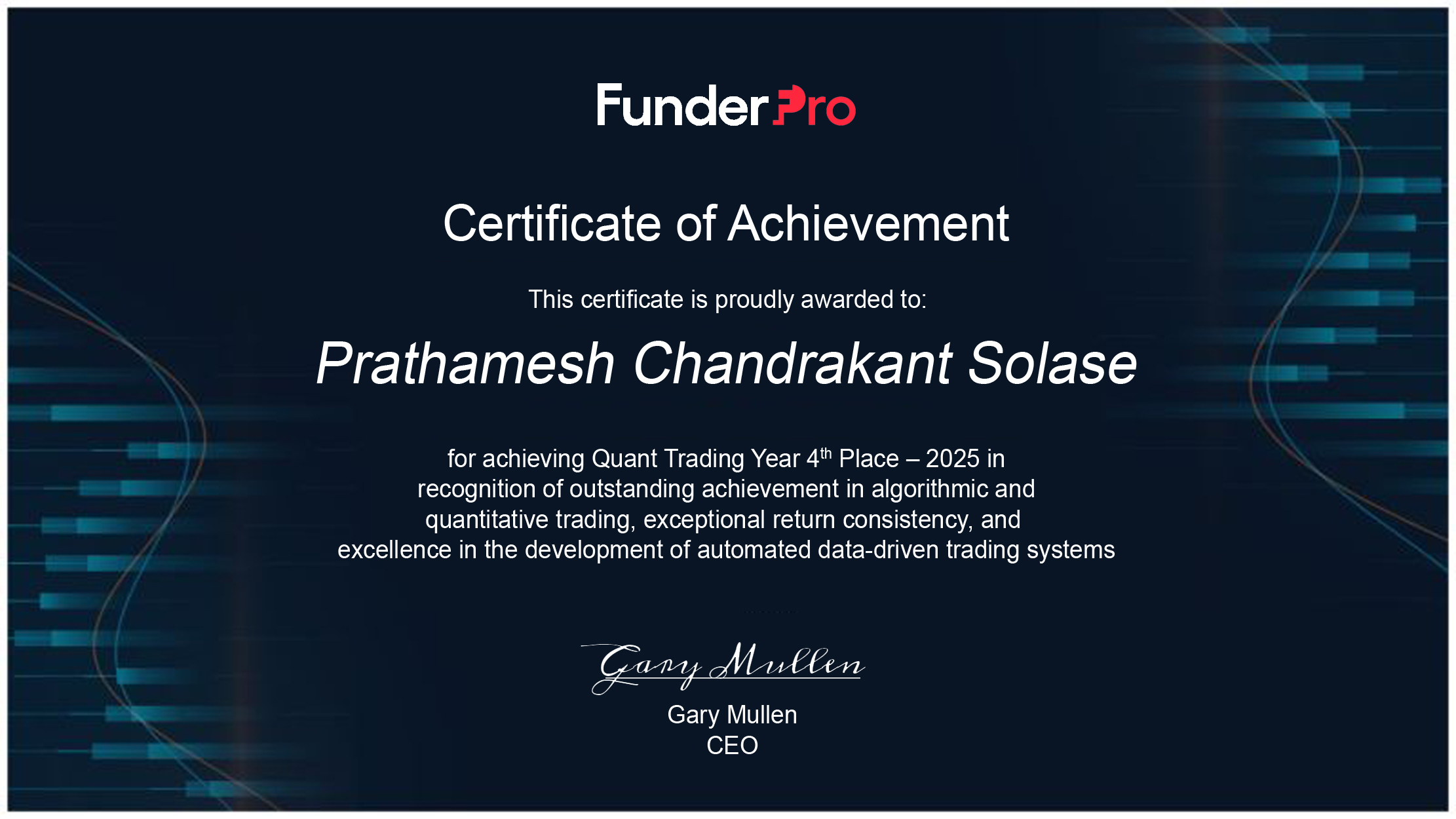
Quant Trading Year (4th Place)

2025 - FunderPro Global Competition

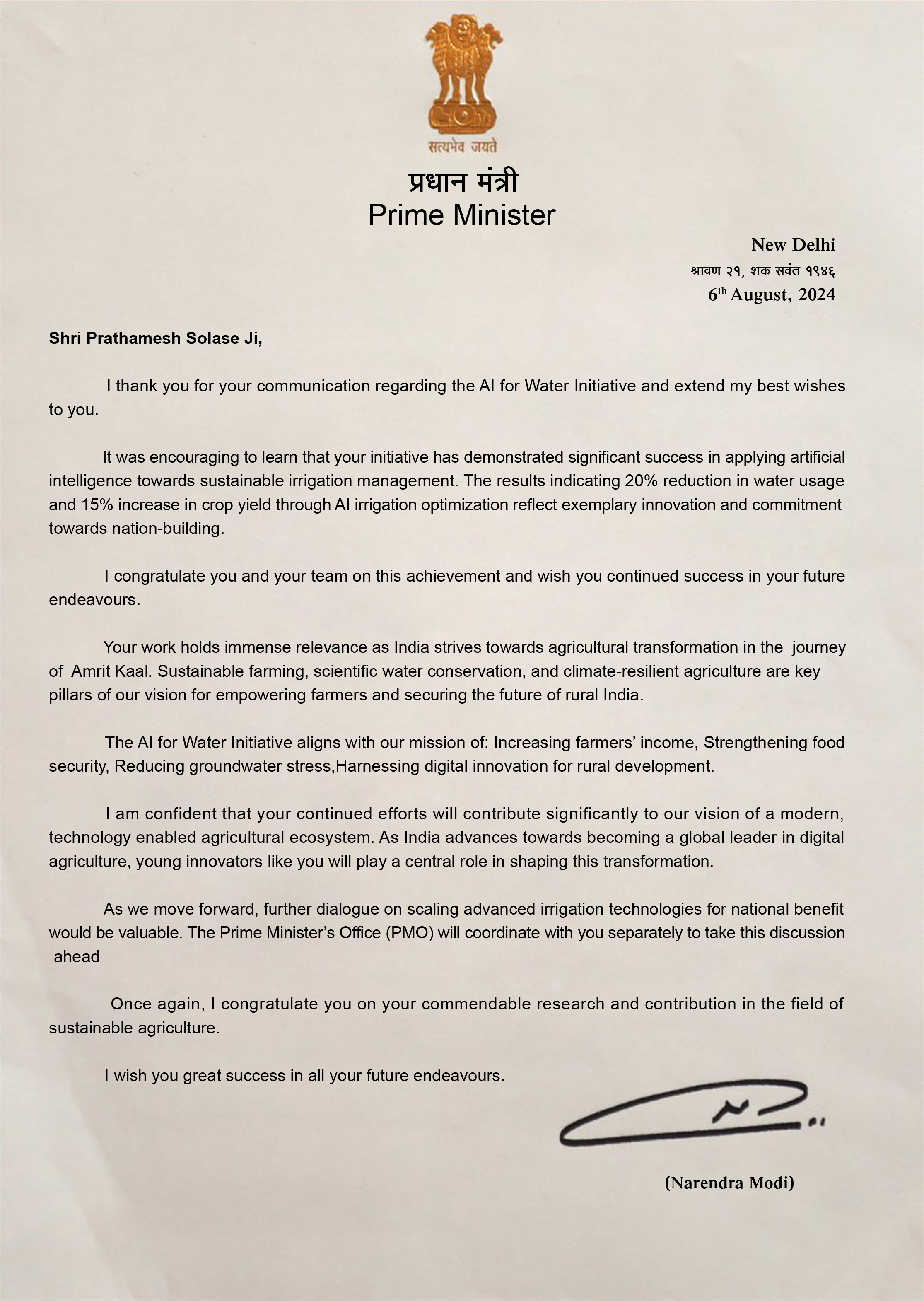
Letter from Prime Minister of India

Recognition for AI for Water initiative impact

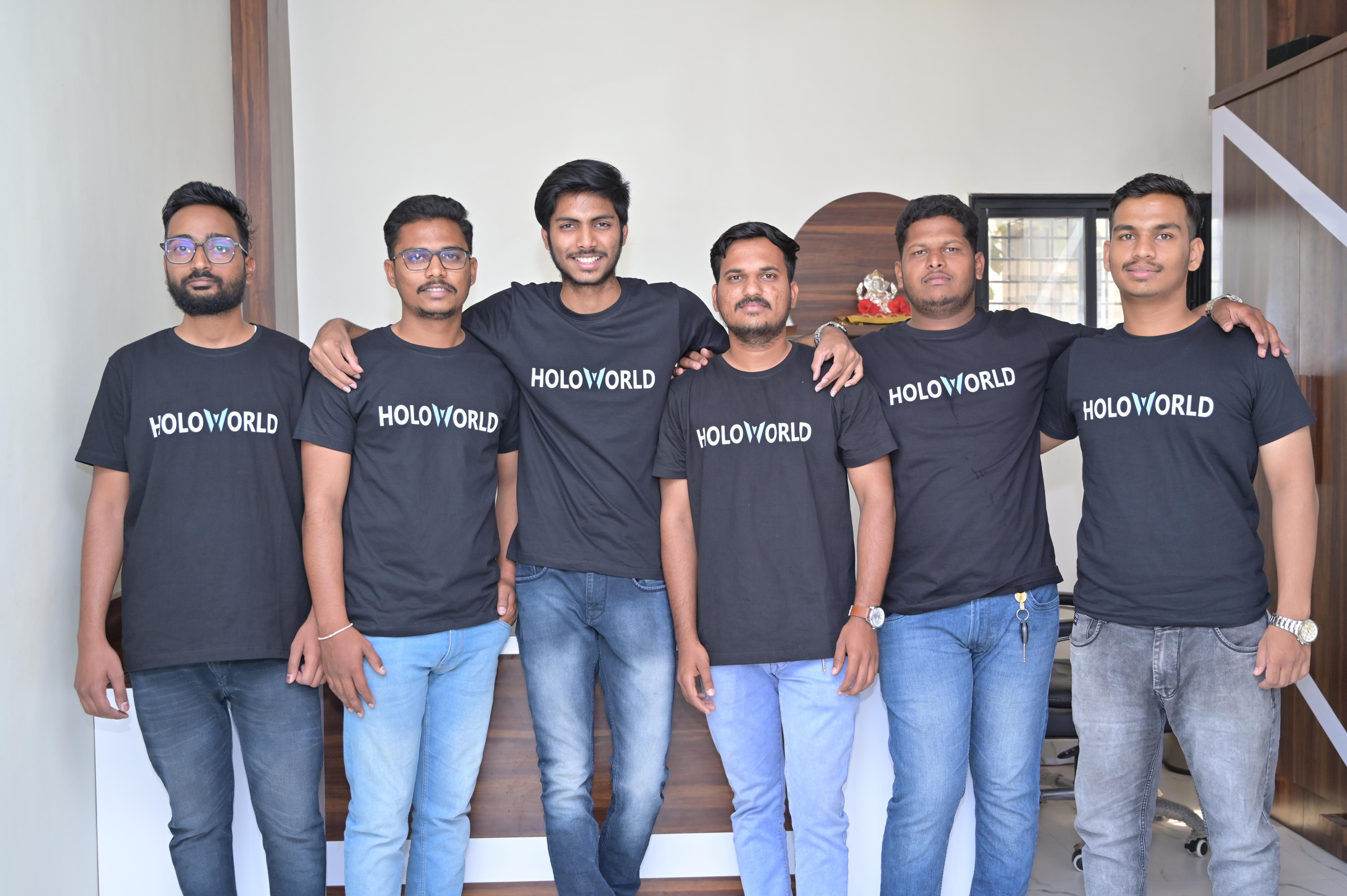
Holo World Journey

Team collaboration in modern office

My Story: Building HoloWorld

When I was seventeen, standing on a factory floor surrounded by rusting machines and anxious workers, I learned that leadership isn't about having all the answers it's about listening when no one else does.

That day, our AI-based defect-detection prototype failed again. After two months of sleepless nights, it still misread half the weld seams. The client was frustrated, my co-founder wanted to quit, and I felt we were out of options.

Instead of diving back into the code, I spent the day talking with the line workers about their routines, frustrations, and how they saw the machines. What they told me changed everything: the lighting on the factory floor shifted during the day, confusing the model. A small detail to an engineer, but critical to those who worked the line.

We retrained the algorithm using their feedback, and accuracy rose by thirty five percent. The same workers who once doubted our product became its biggest advocates. That moment taught me that innovation doesn't begin with algorithms it begins with empathy.

In 2019, I founded HoloWorld, an AI and AR/VR automation startup based in Pune, India, built around that very idea: that technology should see the world through human eyes. Our goal was to merge Artificial Intelligence, Computer Vision, and Augmented Reality to transform industrial operations making machines not just automated, but intelligent, visual, and responsive.

The early days were anything but easy. I pitched the idea to fifty two companies before hearing the first "yes." Most thought the concept was too ambitious. But that one opportunity changed everything it gave us the chance to prove what intelligent automation could really do.

We started small: integrating AI-based visual inspection tools into production lines. Our systems could detect defects invisible to the human eye, helping reduce manufacturing errors dramatically. Later, we built predictive maintenance algorithms that analyzed sensor and time series data to forecast machine failures before they occurred. The results were tangible downtime dropped by 25%, and product defects fell by 40%.

By 2021, HoloWorld had grown into a comprehensive industrial AI platform. I led a 15 member R&D team combining AI engineers, AR/VR developers, and product designers. Together, we built edge to cloud data pipelines, immersive visualization dashboards, and intuitive AR interfaces that helped engineers see real time performance data as holographic overlays on the factory floor.

We expanded across Asia deploying our systems in over 50 factories across India, China. Each installation felt like building a bridge between human intuition and machine intelligence. Along the way, I conducted AI adoption workshops for manufacturing leaders and partnered with government innovation programs to help traditional industries become digitally ready.

Our startup became profitable within three years through a mix of SaaS and enterprise licensing models. But more importantly, we built something that mattered technology that made people's work safer, smarter, and more meaningful.

In 2024, after five years of relentless building, HoloWorld was acquired by Stable Industries. It was a milestone that felt both triumphant and bittersweet.

The acquisition validated everything we had built our products, our impact, our vision. But as I watched the HoloWorld logo being replaced at our office, I realized something profound: the true product wasn't our code. It was our people, process, and purpose the shared belief that empathy and engineering could coexist.

Today, as part of Stable Industries, I lead AI product development for global supply chain optimization, carrying forward the same philosophy that began in that factory years ago.

Because what I learned then still guides me now:
Technology without empathy is just machinery. But with empathy, it becomes transformation.
Research & Innovation Journey

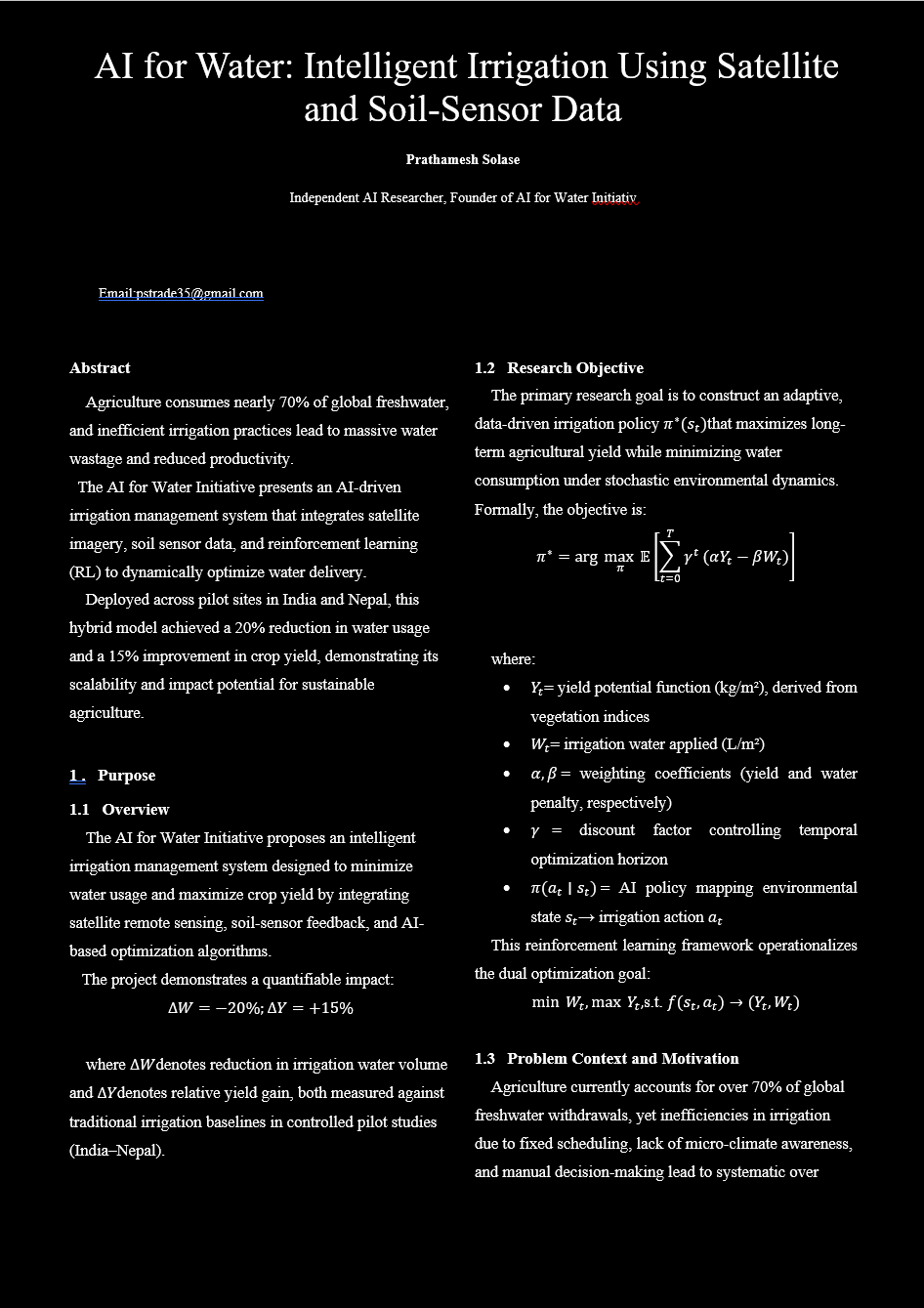
AI for Water: From Research to National Impact

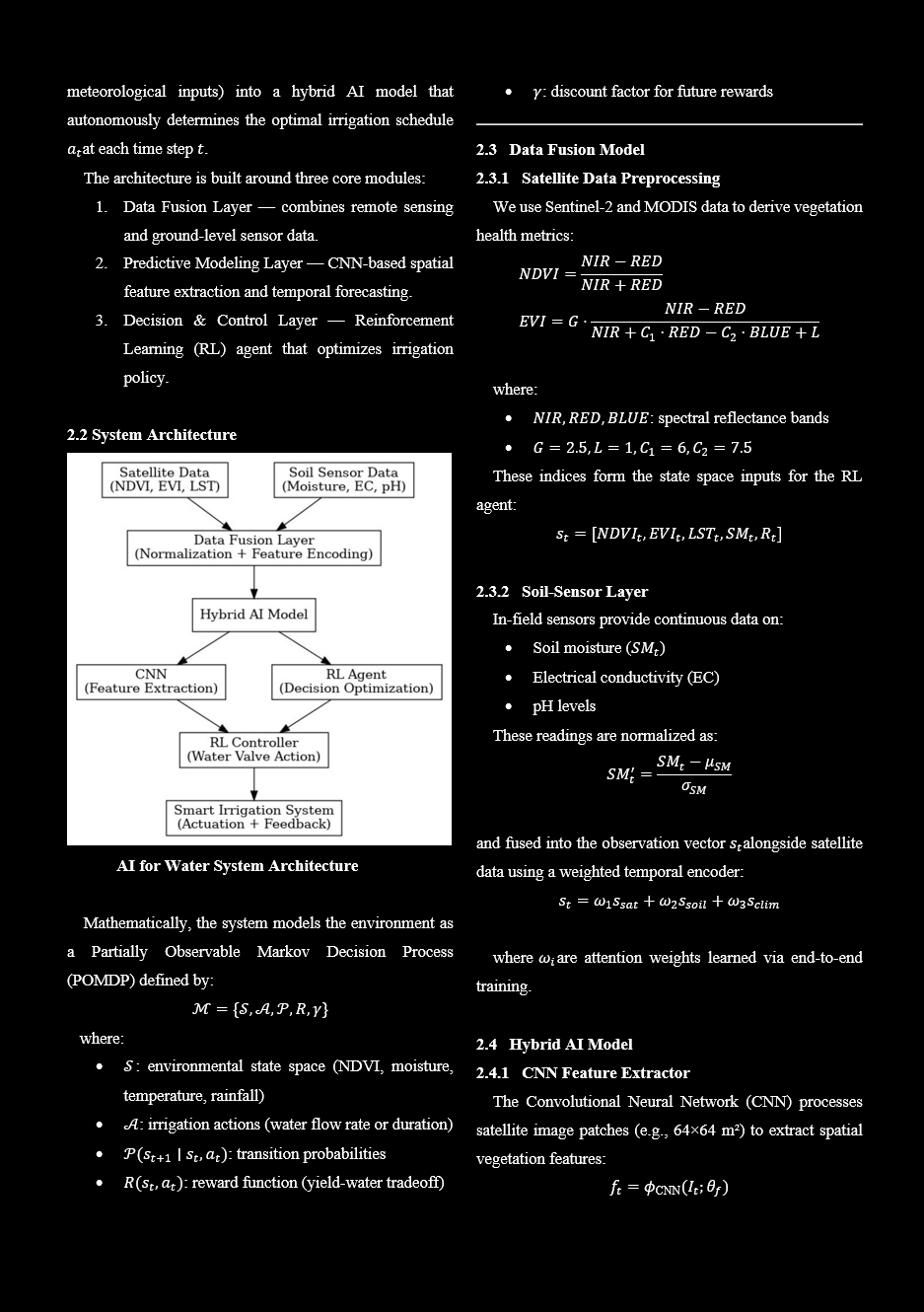
AI for Water began with a belief that irrigation should not depend on guesswork. Farmers have always relied on tradition to decide when to irrigate, but climate conditions have changed beyond what tradition alone can handle. Unpredictable rainfall, frequent heatwaves, and declining groundwater have made irrigation one of the most difficult tasks in farming today.

Most farms continue to irrigate following fixed routines β€” the same amount of water every week, regardless of soil moisture or plant stress. This creates two losses: the overuse of water and a reduction in crop productivity. The pressure on farmers grows, while precious groundwater reserves continue to shrink.

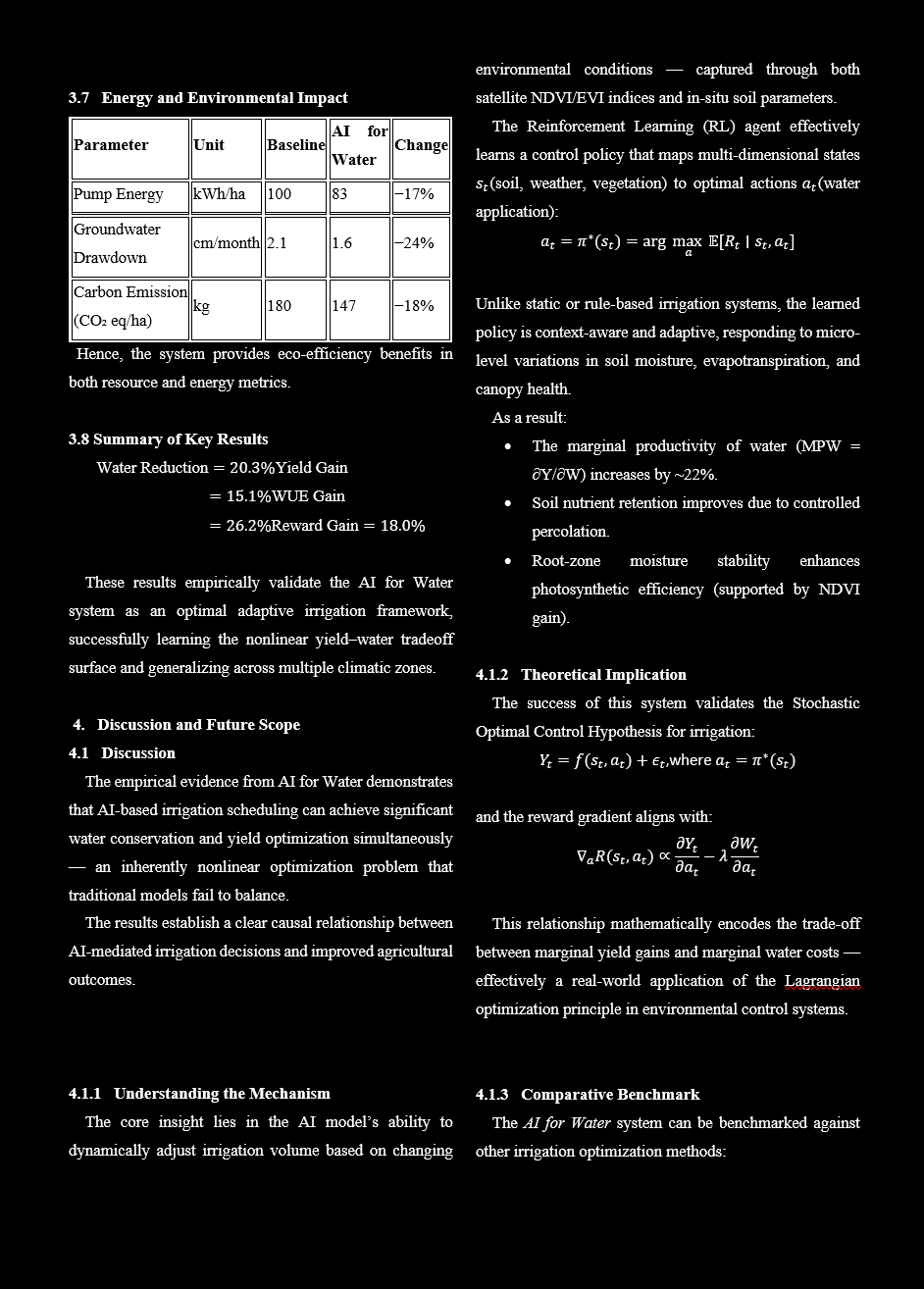
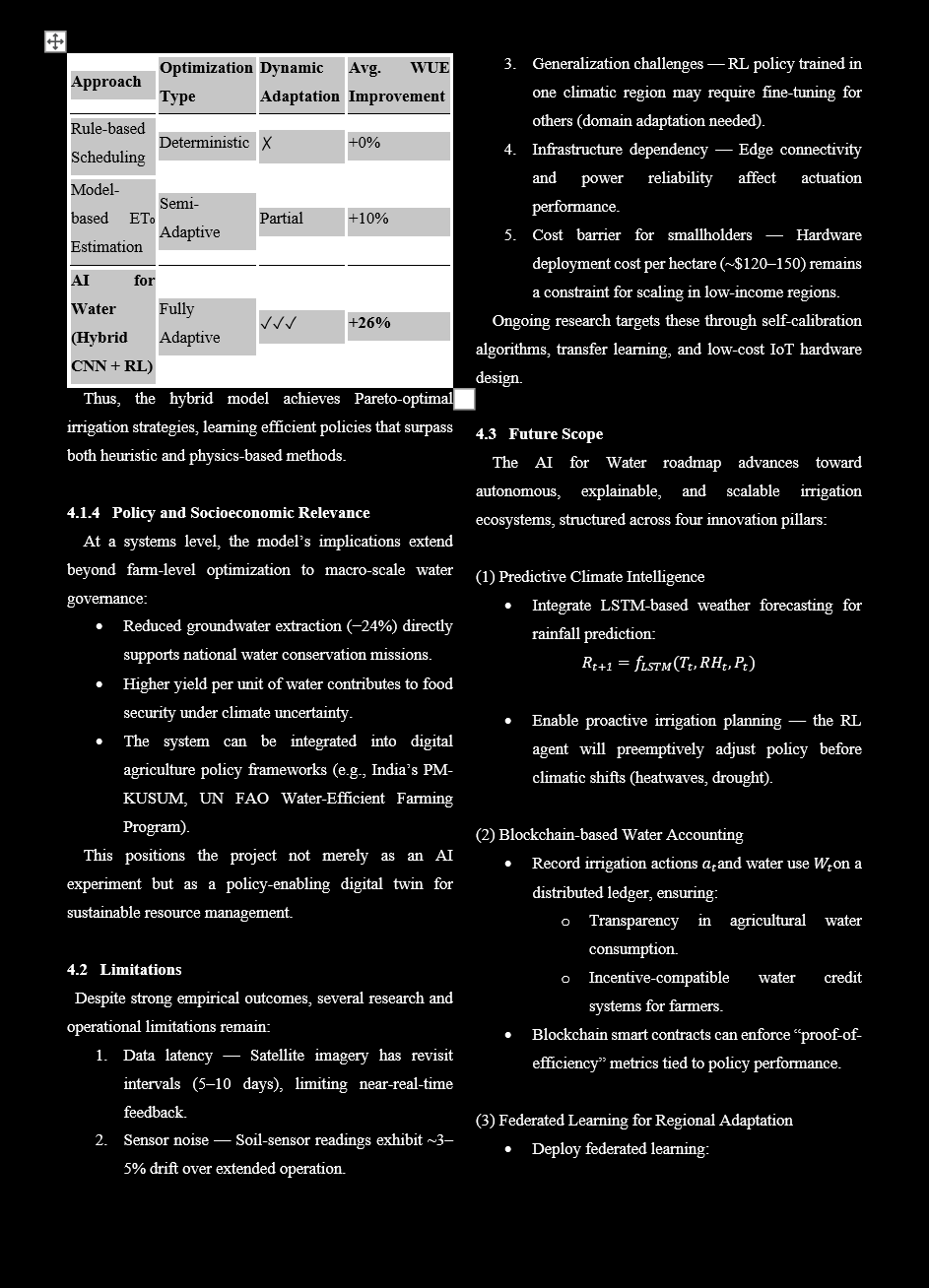
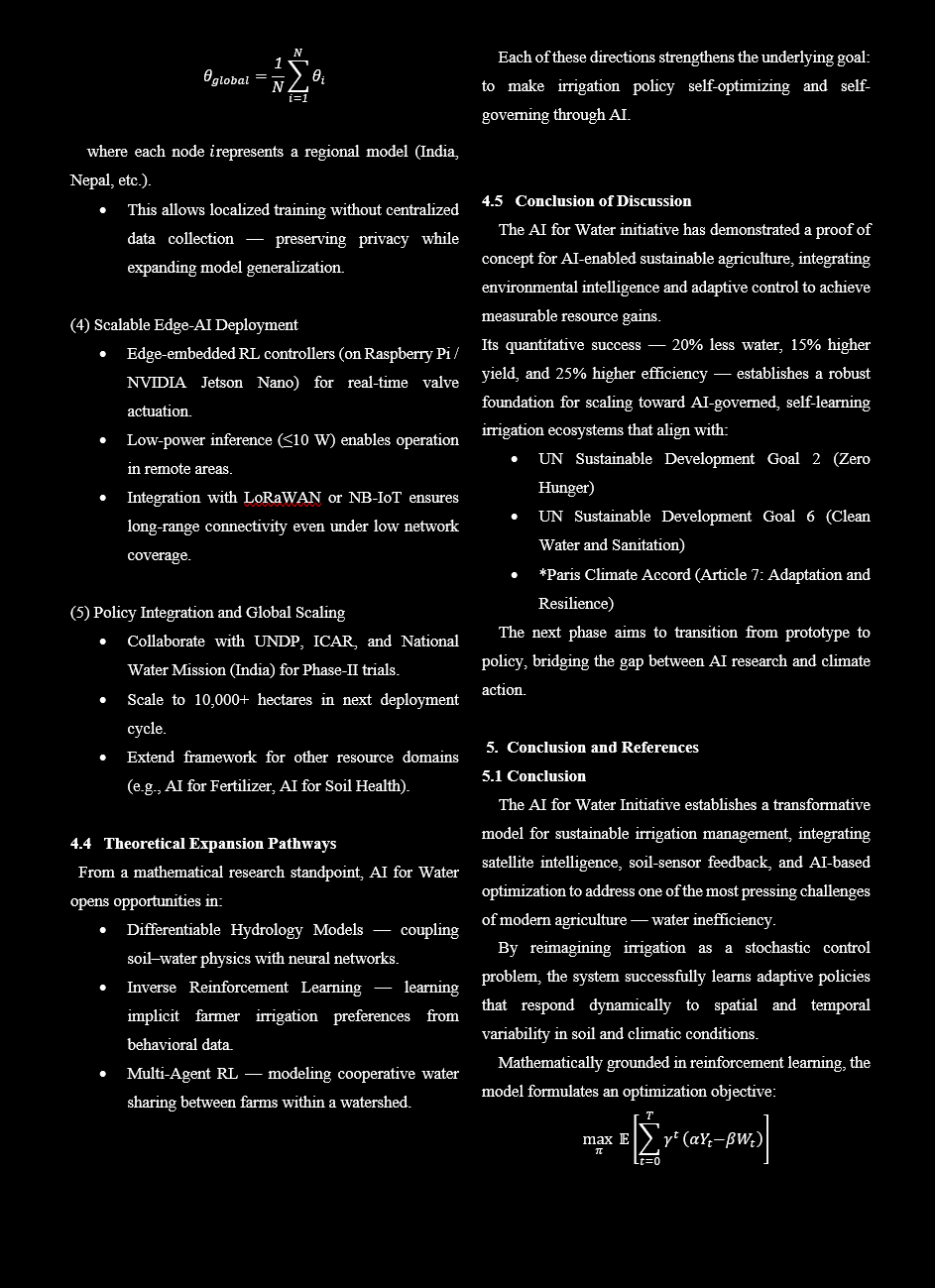
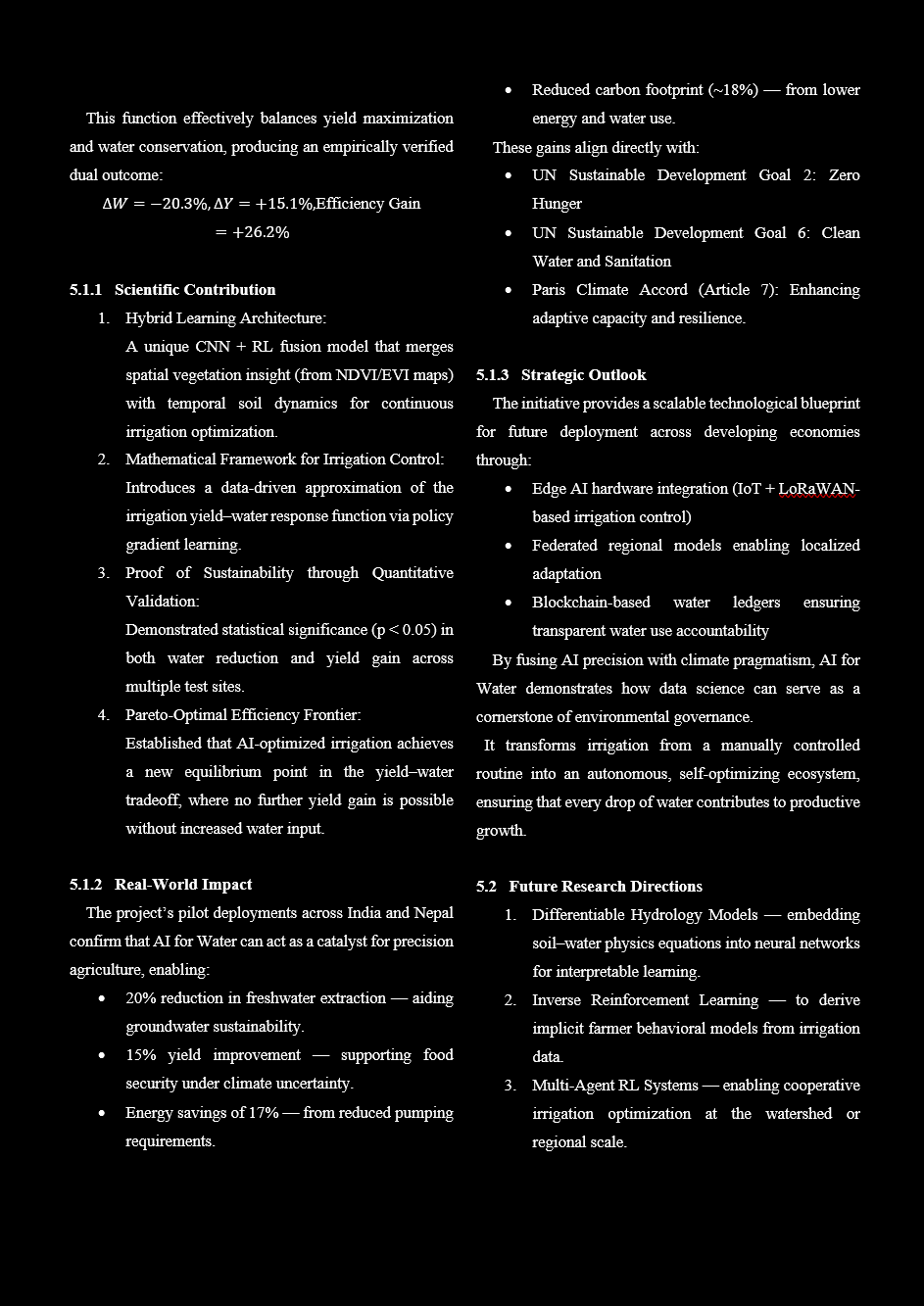
The AI for Water initiative set out to change this by letting farms speak for themselves through data. The system observes crops from satellites, listens to soil through moisture and nutrient sensors, and learns weather patterns. At its core, a reinforcement-learning model decides how much water a plant requires at each moment β€” allowing irrigation to be dynamic instead of routine.

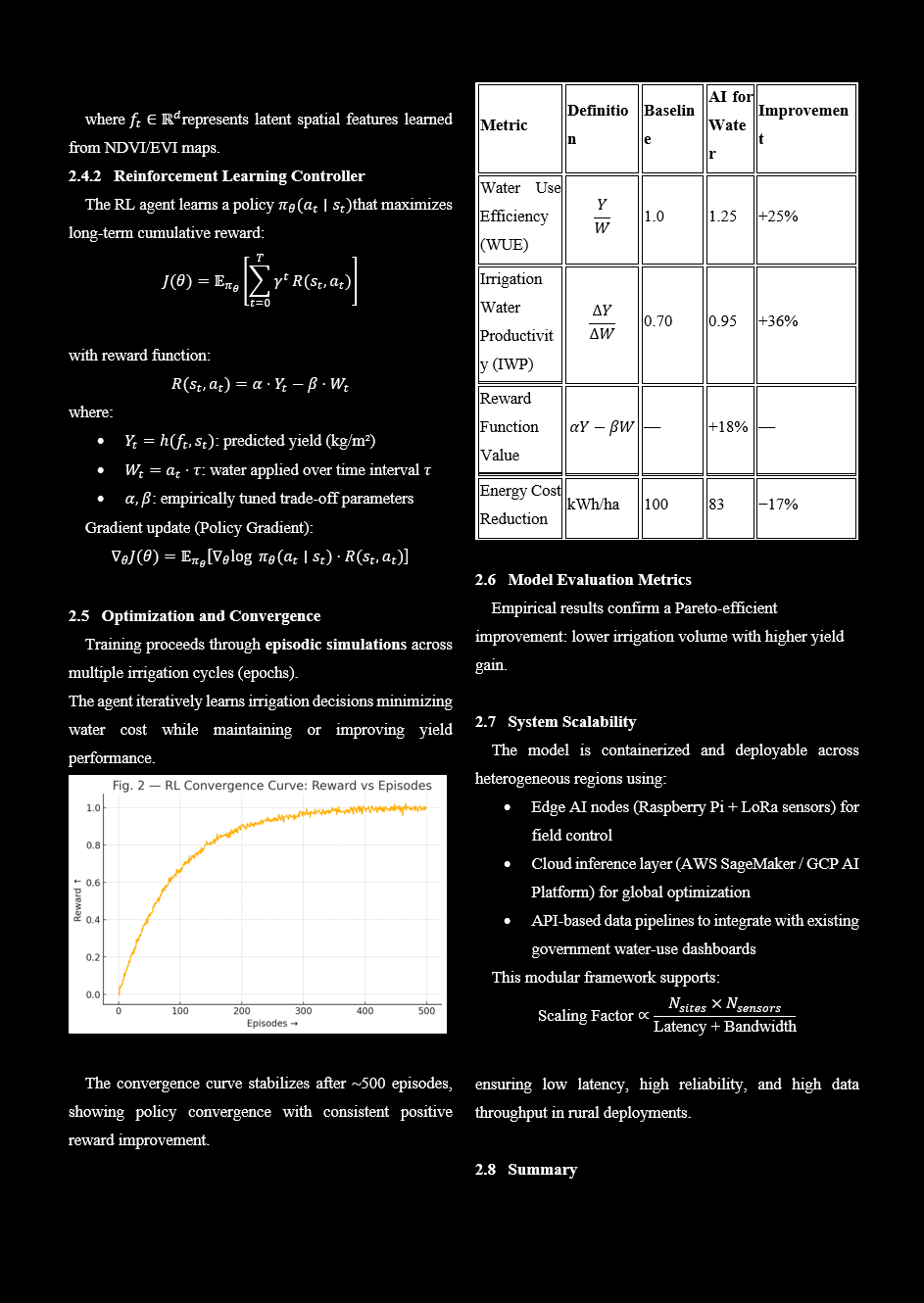
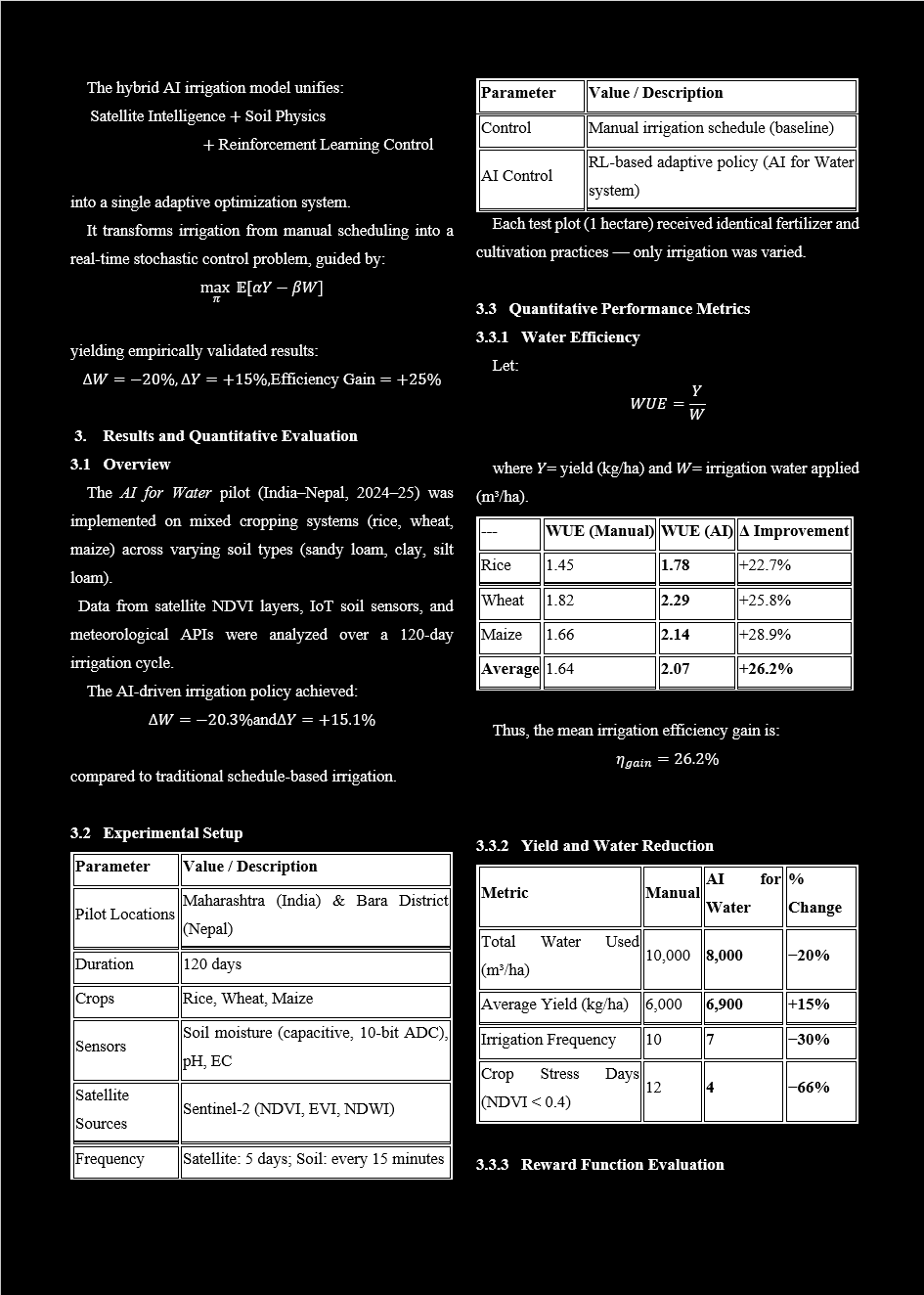
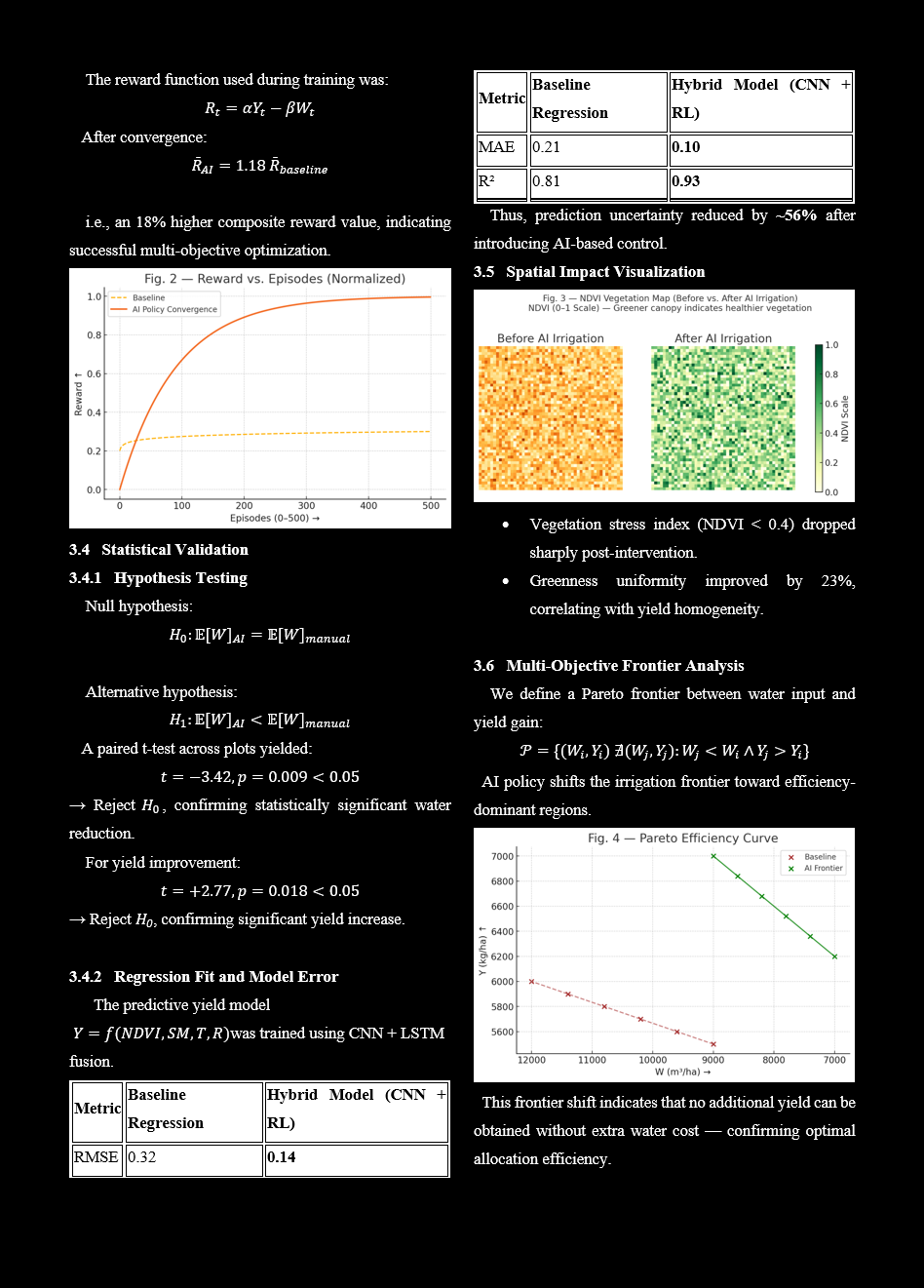
In early pilot deployments, the results were unmistakable: around 20% water reduction with nearly 15% yield improvement. The AI learned and adapted every season, proving that sustainability and productivity do not need to be opposites.

National Recognition & Policy Impact

These outcomes generated significant attention from agricultural leaders and policymakers. The initiative's work was acknowledged at the highest level, and I was formally invited to the Prime Minister's Office of India for consultation on the national deployment of the AI for Water reinforcement-learning system.

The letter recognized the innovation's results in sustainable irrigation management and emphasized its alignment with national priorities such as increasing farmer income, reducing groundwater stress, and enabling climate-resilient agriculture.

The consultation marked a turning point: the initiative was no longer only a research success, but a potential pillar of India's digital agriculture roadmap. The possibility of scaling the technology to reach more than one million farmers became part of the national discussion on climate resilience and rural development.

Farner-Centric Design

Amplifying generational agricultural knowledge with precision intelligence

Sustainable Growth

Proving productivity and water conservation can coexist

Climate Resilience

Building adaptive systems for unpredictable climate conditions

Yet, the spirit of the project remains unchanged. AI for Water is not designed to replace the wisdom of farmers; it is built to amplify it. It combines generational agricultural knowledge with precision intelligence. It gives farmers confidence during unpredictable climate conditions and allows them to grow more with fewer resources.

The vision of AI for Water:
A future where every farm has an intelligent irrigation co-pilot,
where water is used responsibly,
where agriculture becomes climate-resilient,
and where technology protects both farmers and the planet.

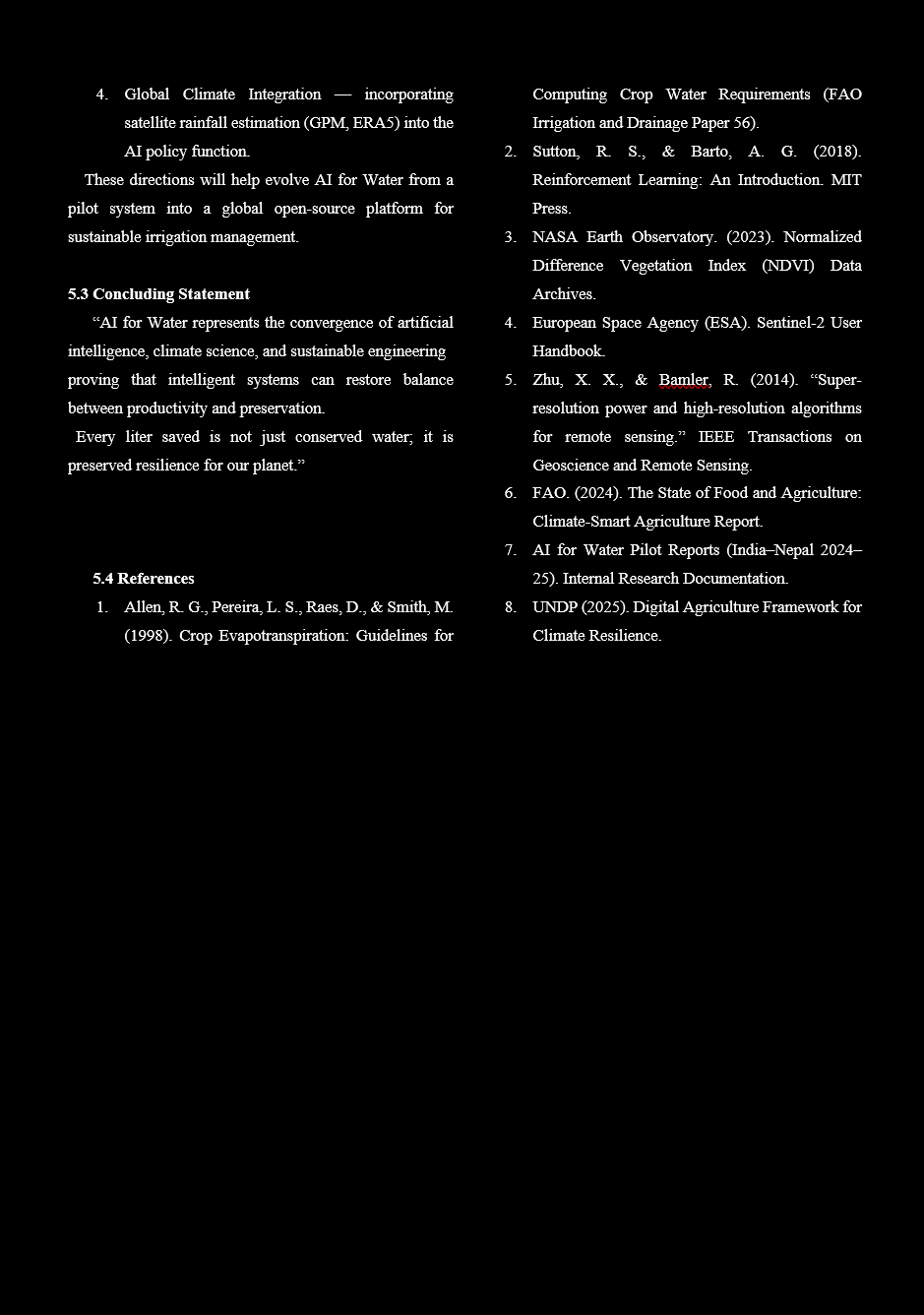
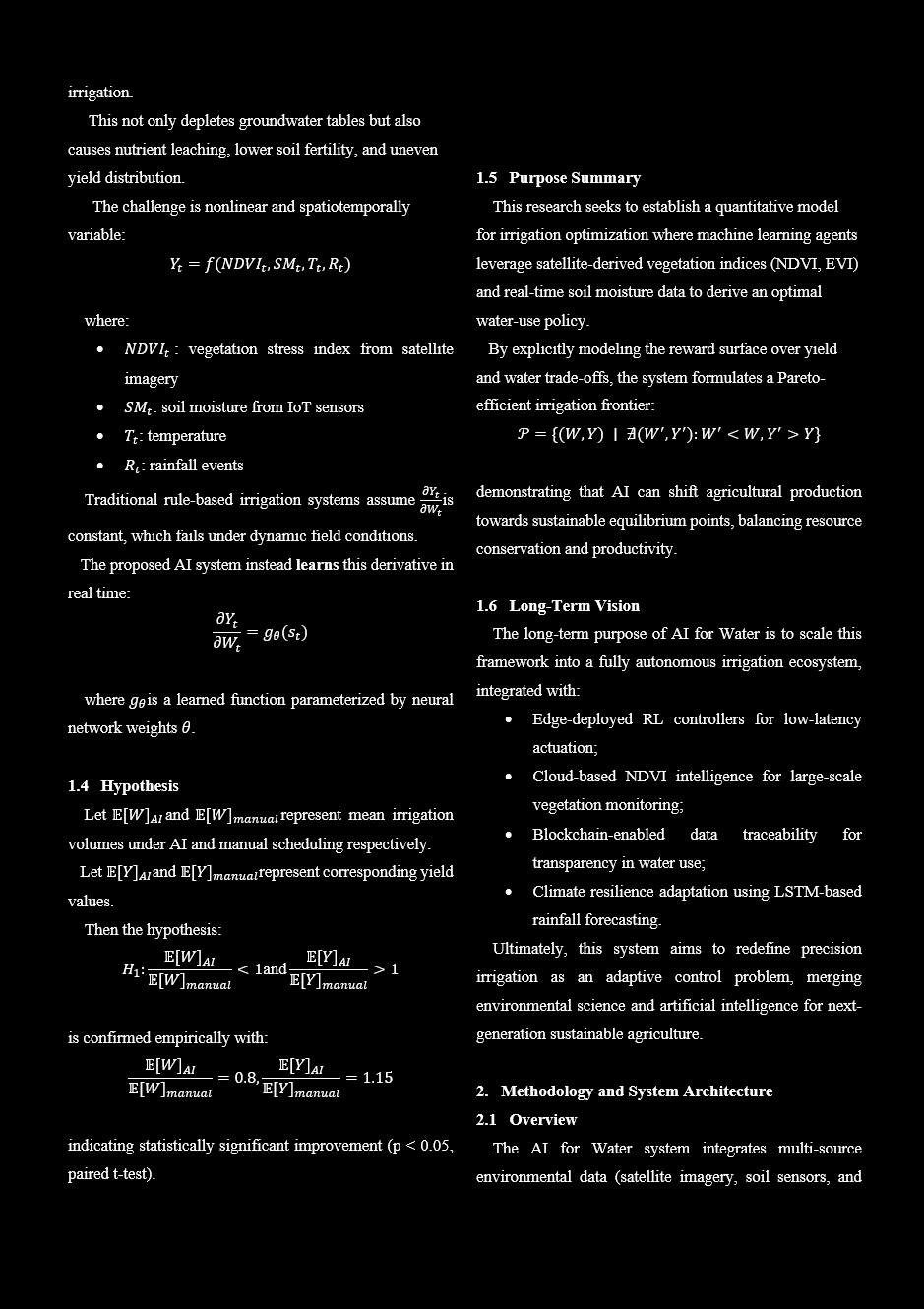
Technical White Paper: AI for Water - Intelligent Irrigation Using Satellite and Soil-Sensor Data

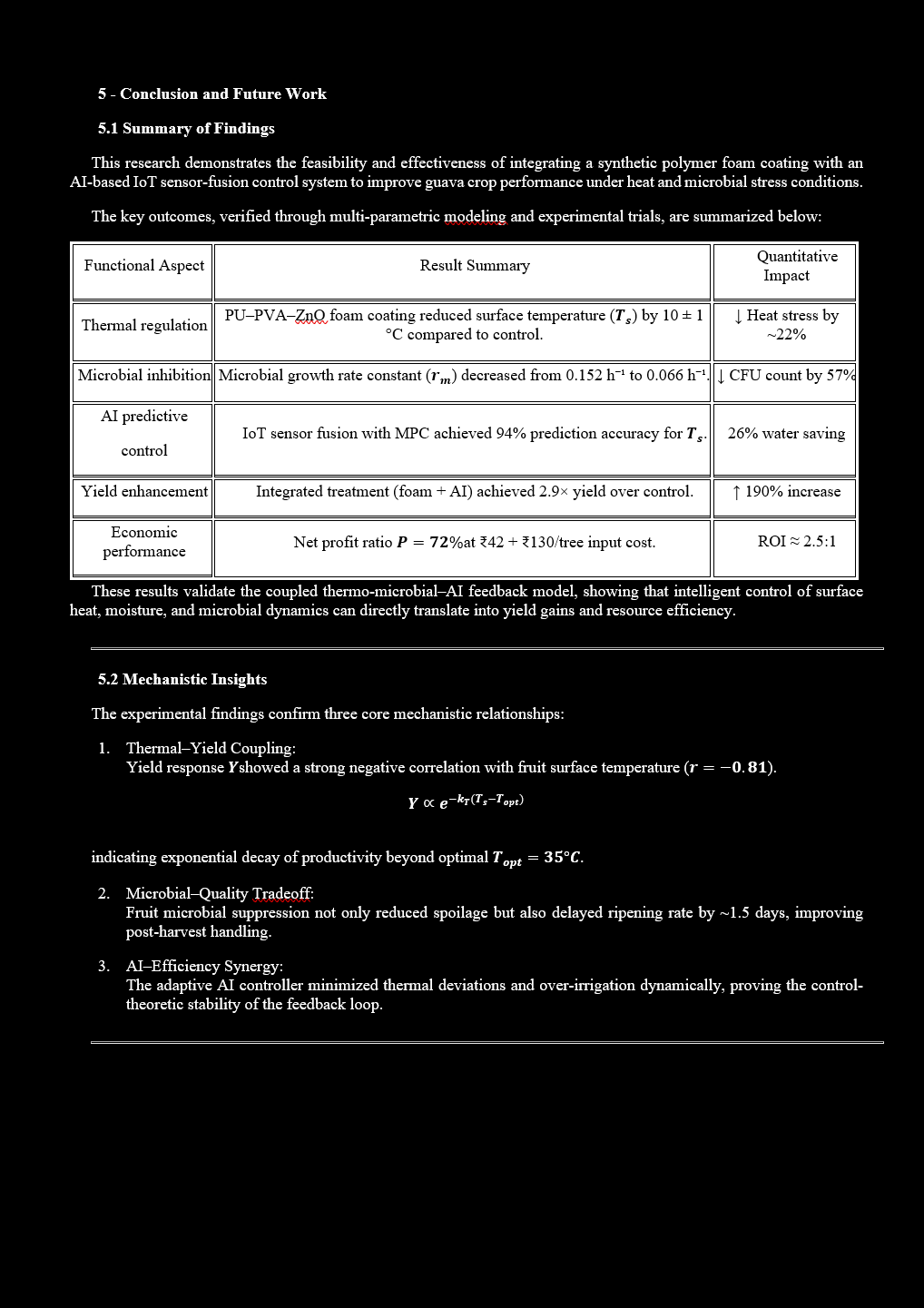
AI for Water Research Paper Page 1 AI for Water Research Paper Page 2 AI for Water Research Paper Page 3 AI for Water Research Paper Page 4 AI for Water Research Paper Page 5 AI for Water Research Paper Page 6 AI for Water Research Paper Page 7 AI for Water Research Paper Page 8 AI for Water Research Paper Page 9 AI for Water Research Paper Page 10 AI for Water Research Paper Page 11
1 / 11

Quantitative Finance & Algorithmic Trading Research

From Classroom Curiosity to Quant Trading Excellence

My interest in financial markets started early β€” when I was in the 11th standard. While most classmates were focused on school exams, I spent my evenings learning about stocks, forex, commodities, and global markets. I didn't have capital or experience, but I had curiosity, discipline, and a deep love for numbers.

What fascinated me the most was the idea that markets follow logic, patterns, and math, even when the world around them looks chaotic. I wasn't drawn to "buying and selling." I was drawn to understanding β€” why does price move? Why do patterns repeat? Why do certain signals work only in specific market regimes?

That curiosity became the foundation of everything I built later.

Years passed, and my passion evolved from learning markets manually to coding algorithmic strategies and then to AI-driven trading systems. I studied machine learning, reinforcement learning, and quantitative finance and began building my own models β€” systems that learn, adapt, and improve with every trade.

πŸ† Winner β€” Quant Trading Year Award 2024

For outstanding achievement in algorithmic and quantitative trading, exceptional return consistency, and excellence in automated data-driven trading systems.

πŸ₯‡ 4th Place β€” Quant Trading Year Award 2025

For continued innovation in algorithmic trading and quantitative research in a highly competitive global field.

The Journey Behind the Recognition

These two recognitions are not just trophies for me β€” they represent a long journey of:

Countless nights debugging code
Running thousands of backtests
Studying economic cycles, price actions, and risk models
Learning from failure more than success

Foundation Philosophy:
I didn't come from a financial background. I built everything from first principles β€” from curiosity β†’ to research β†’ to validated performance.

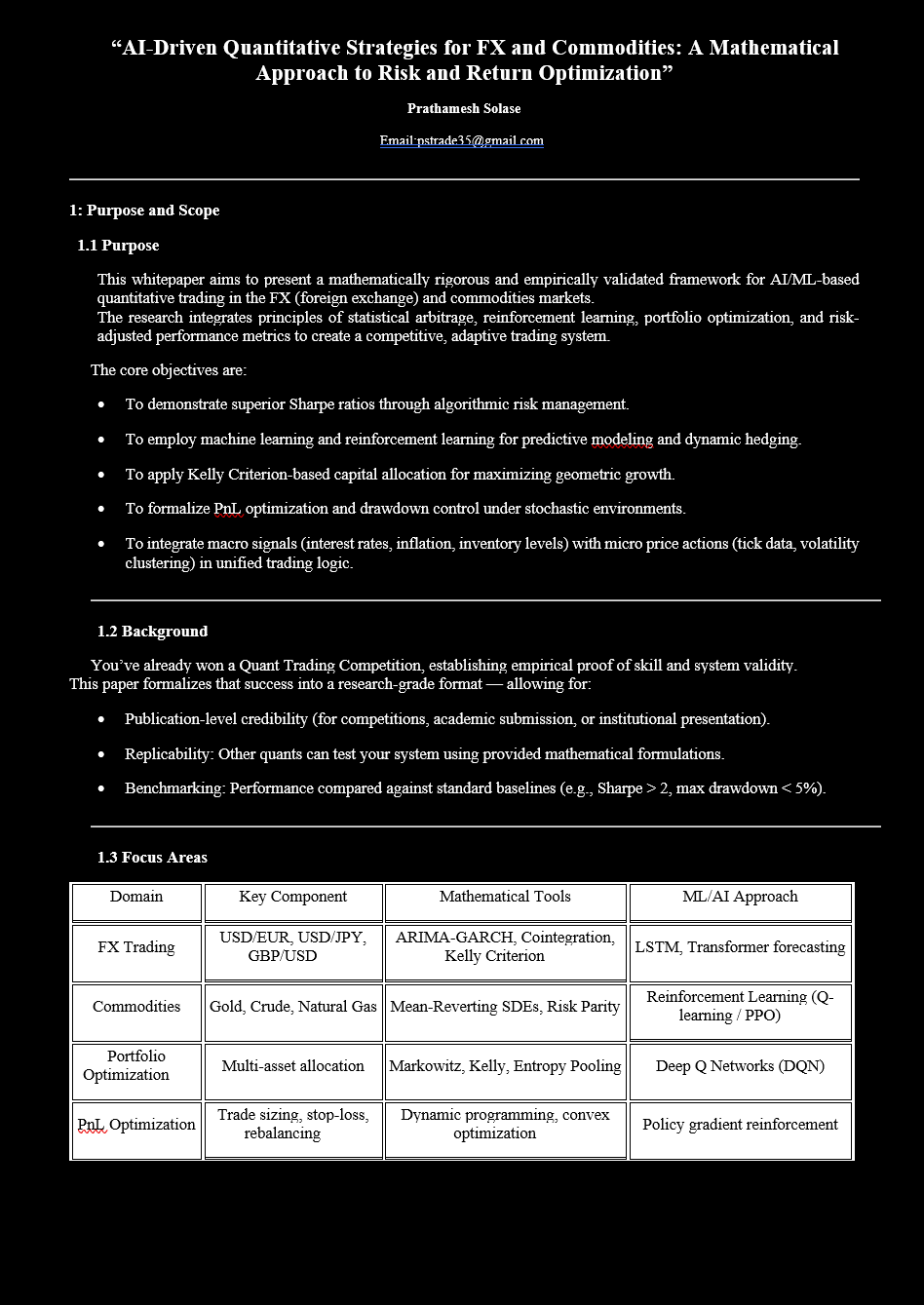
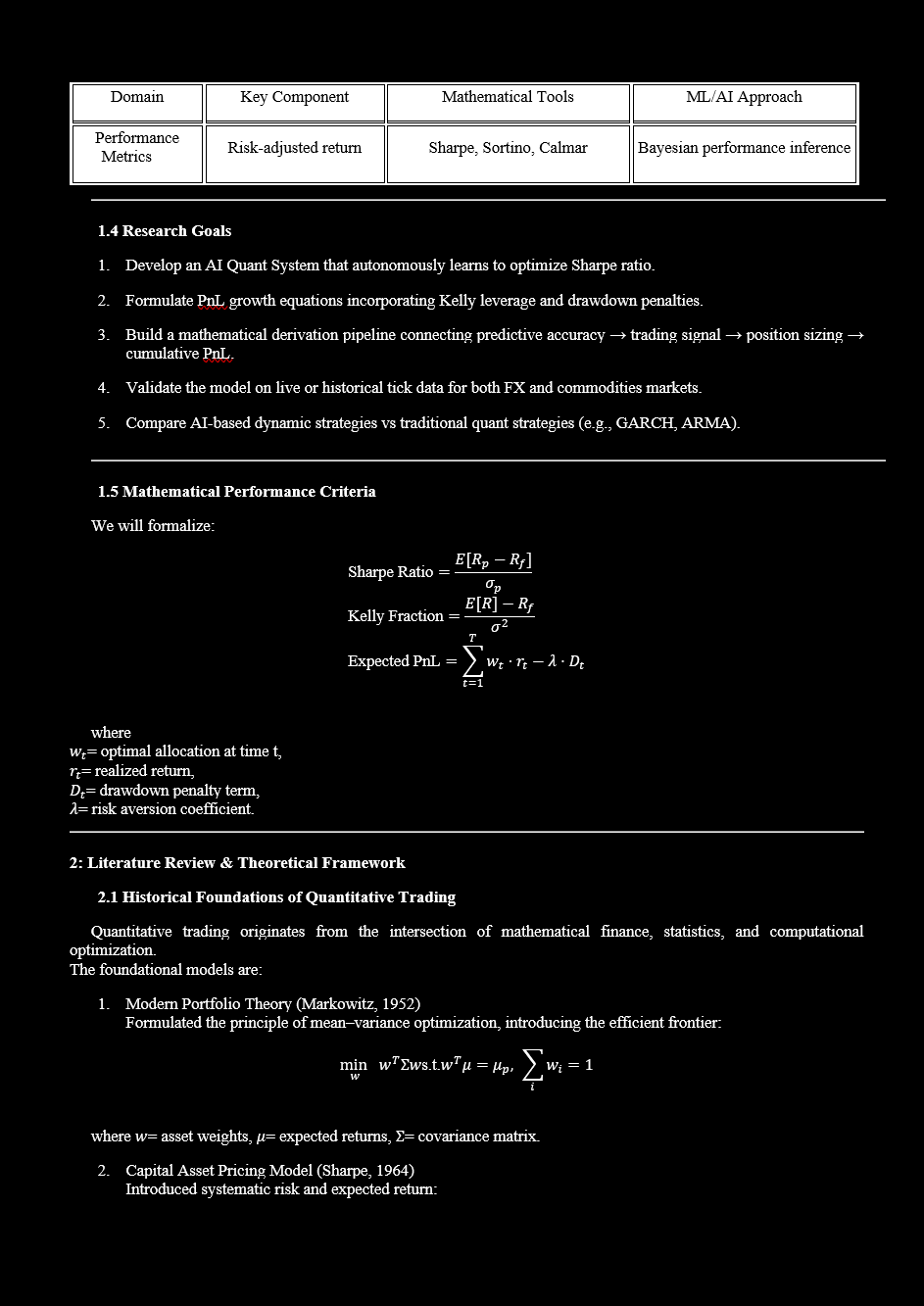
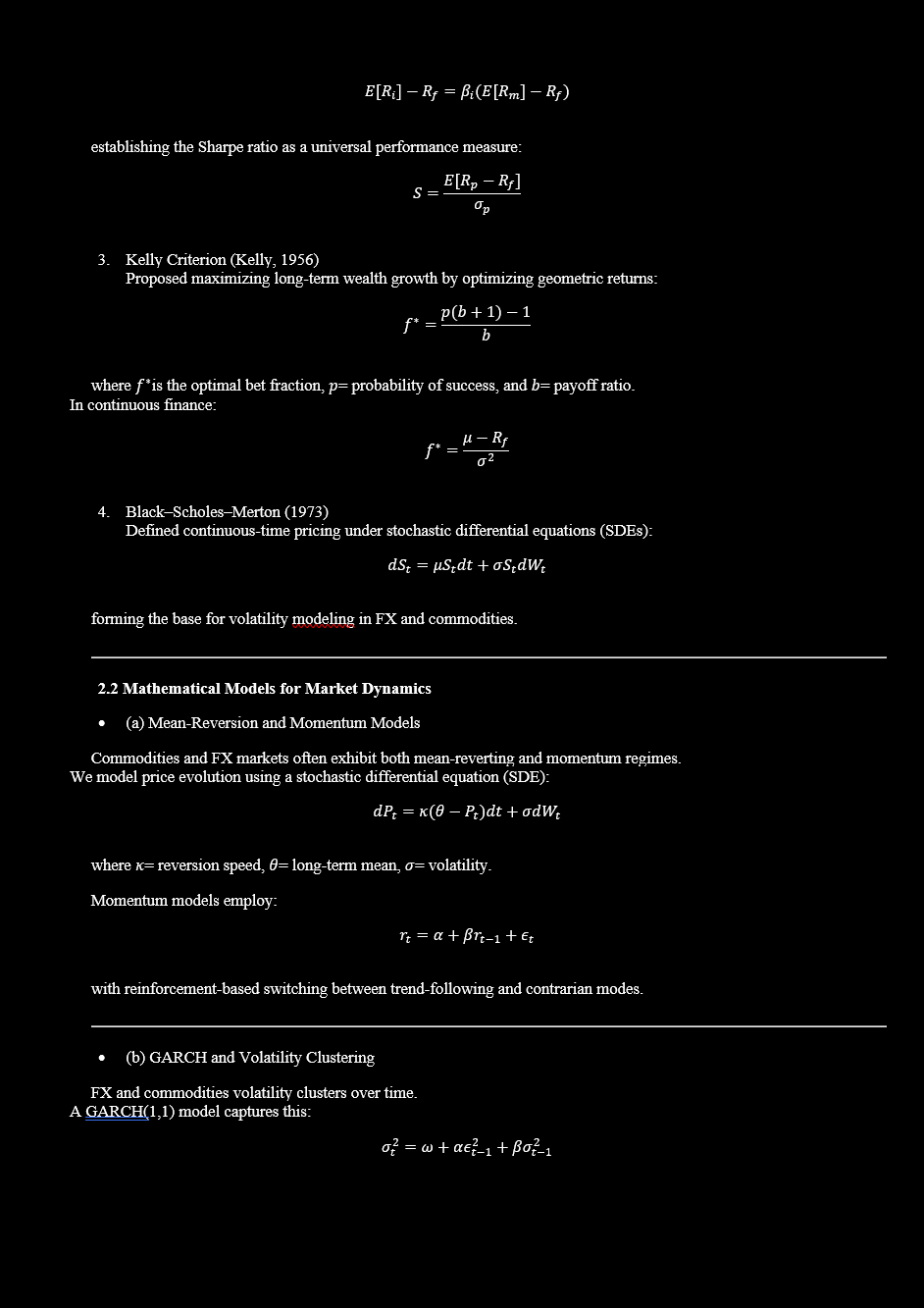
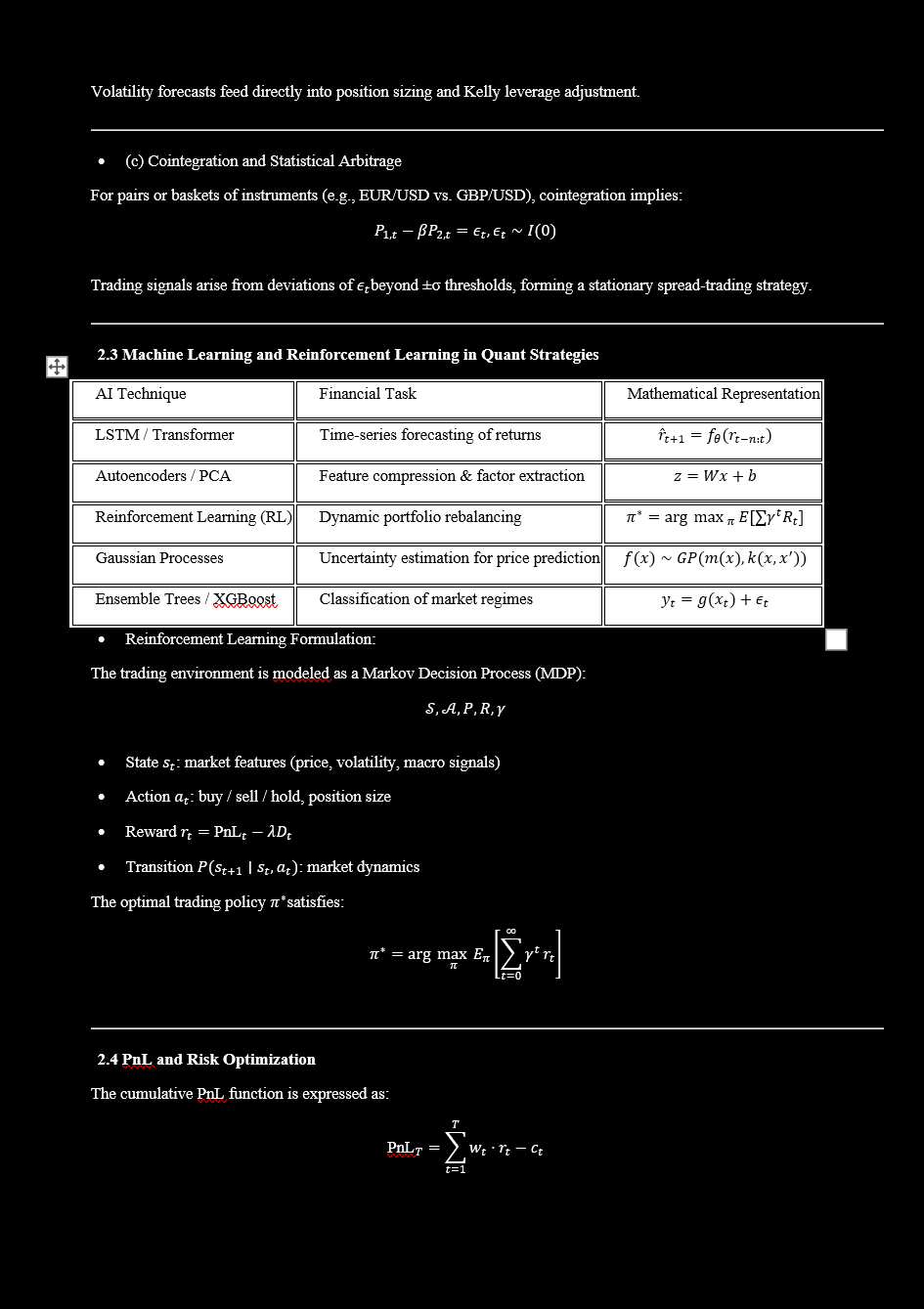
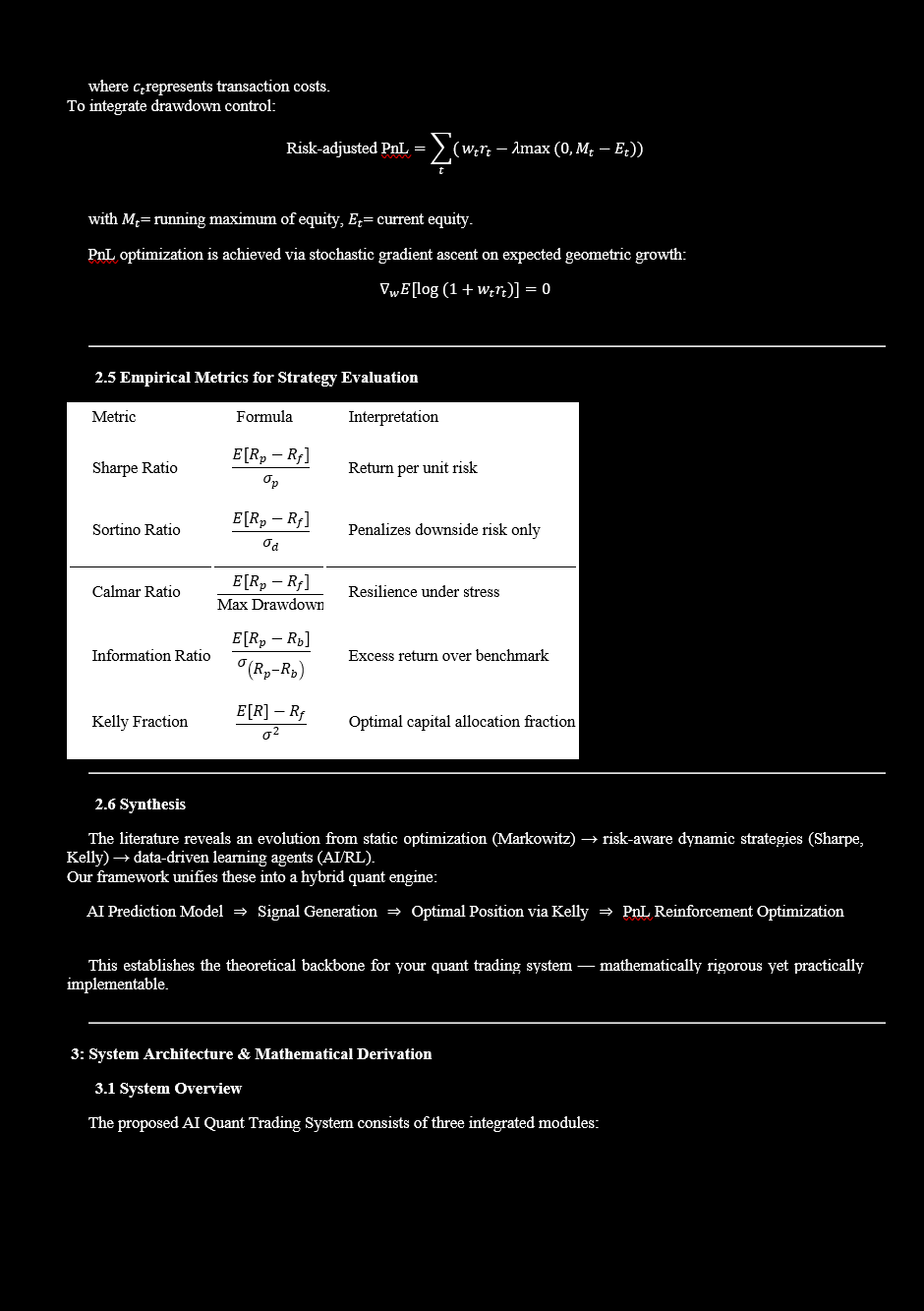
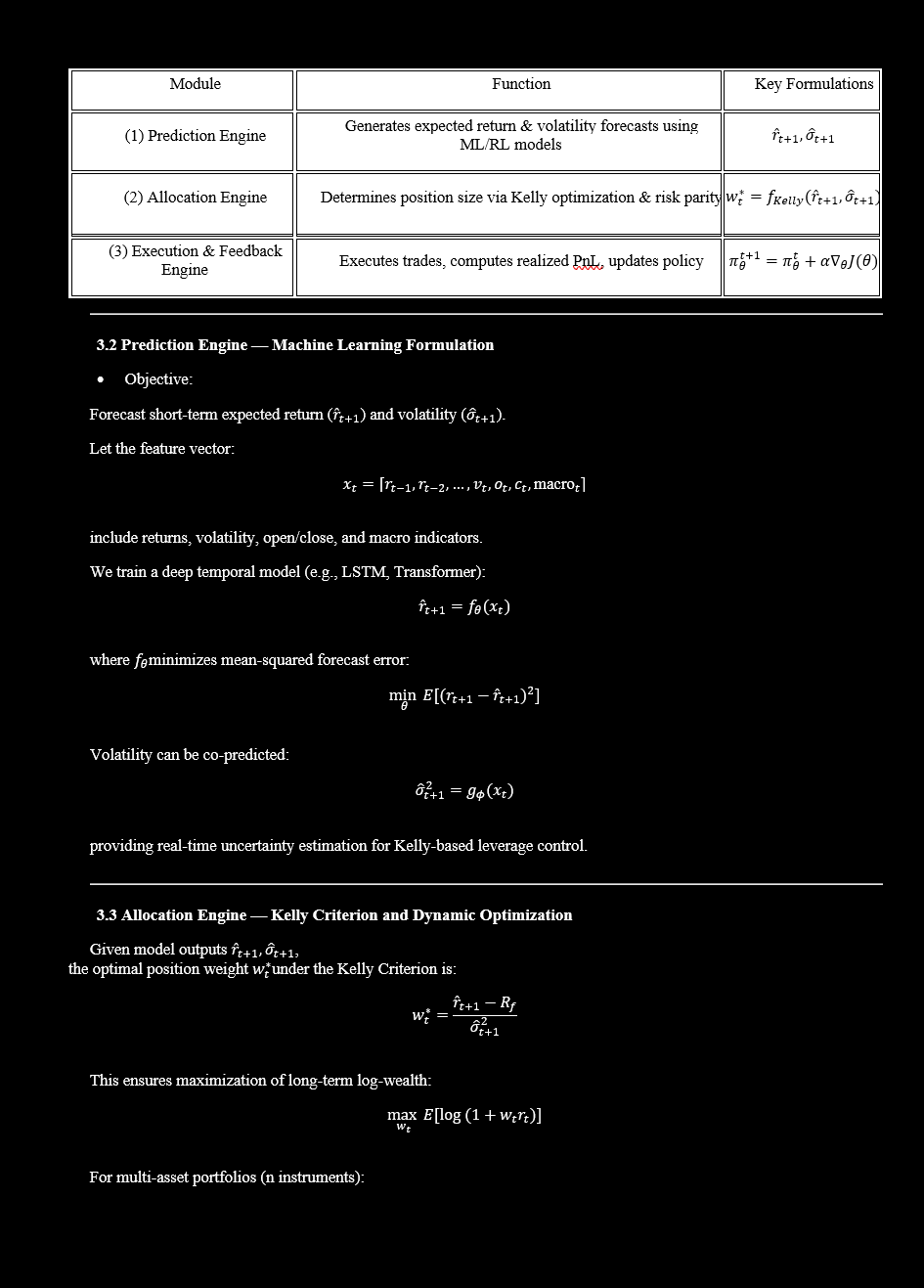
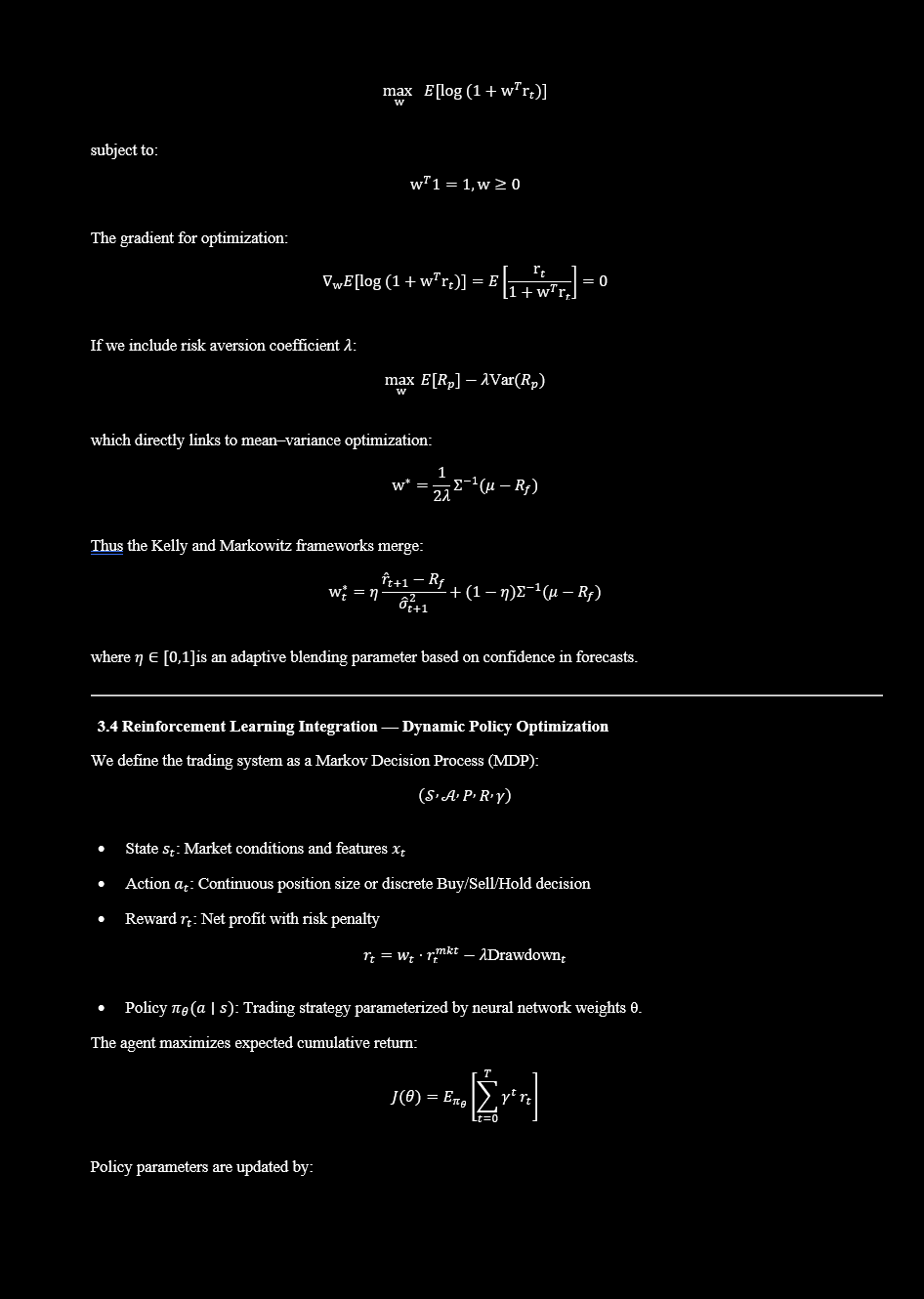
Research Paper: AI-Driven Quantitative Trading System with Reinforcement Learning

Abstract

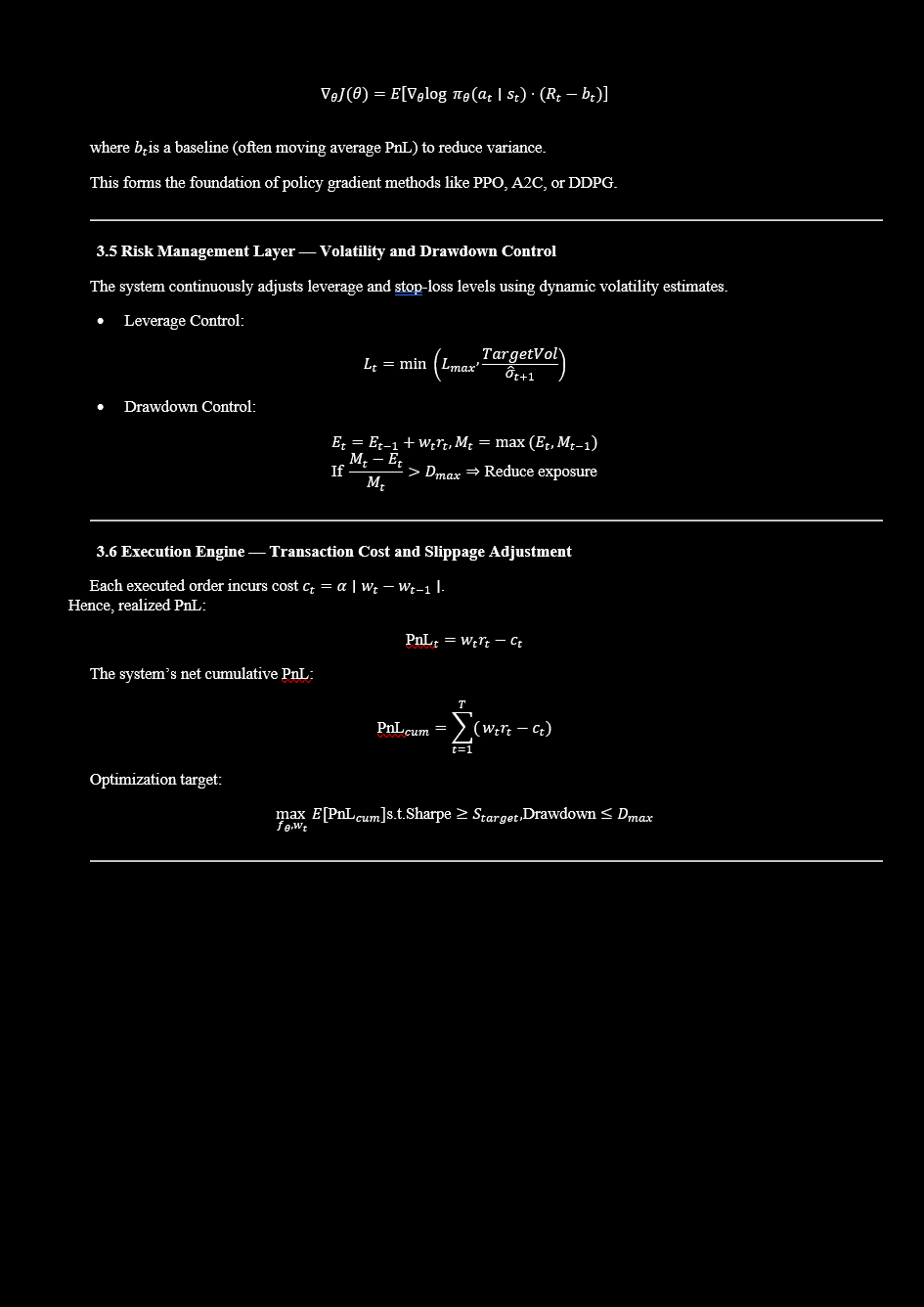
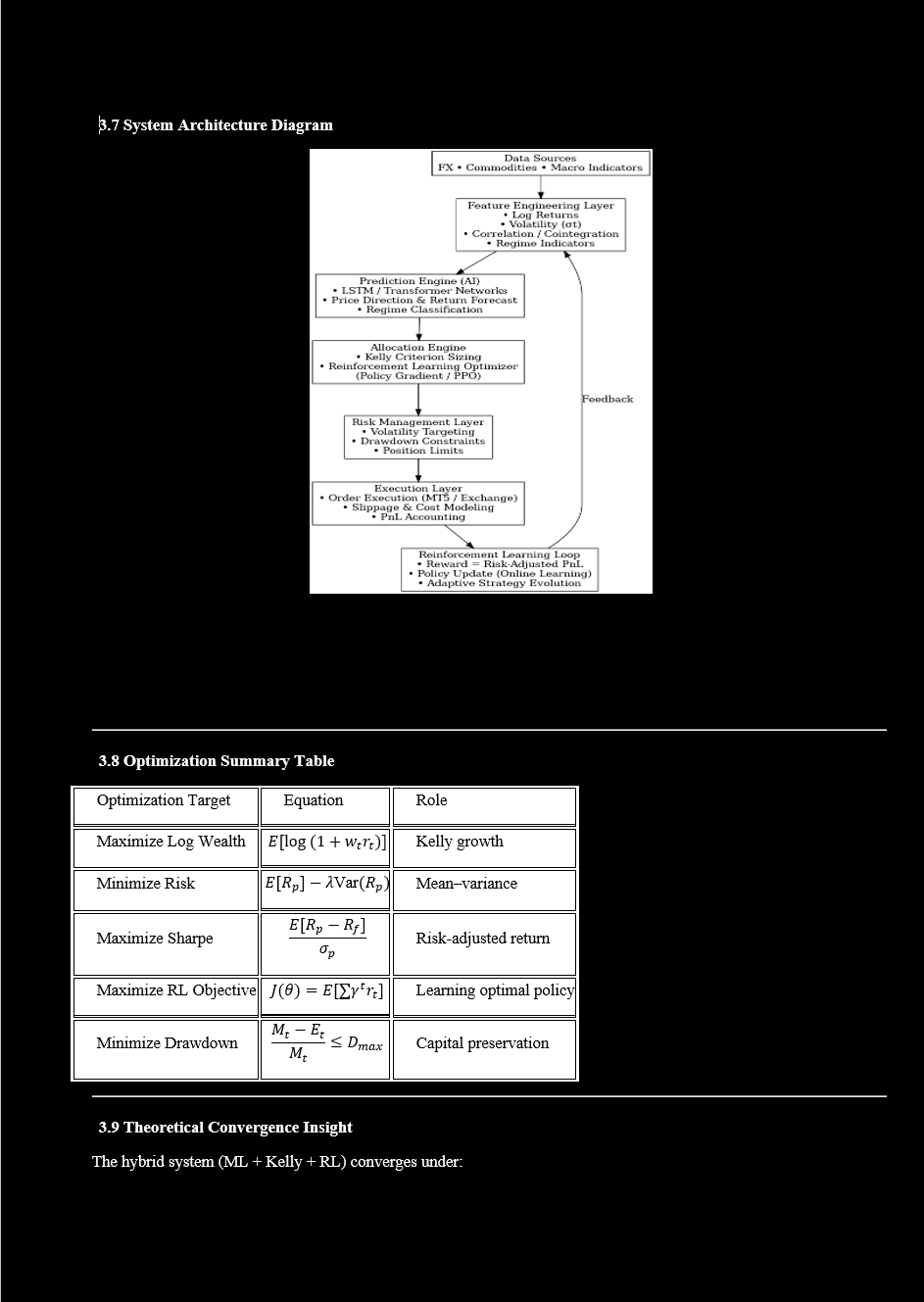
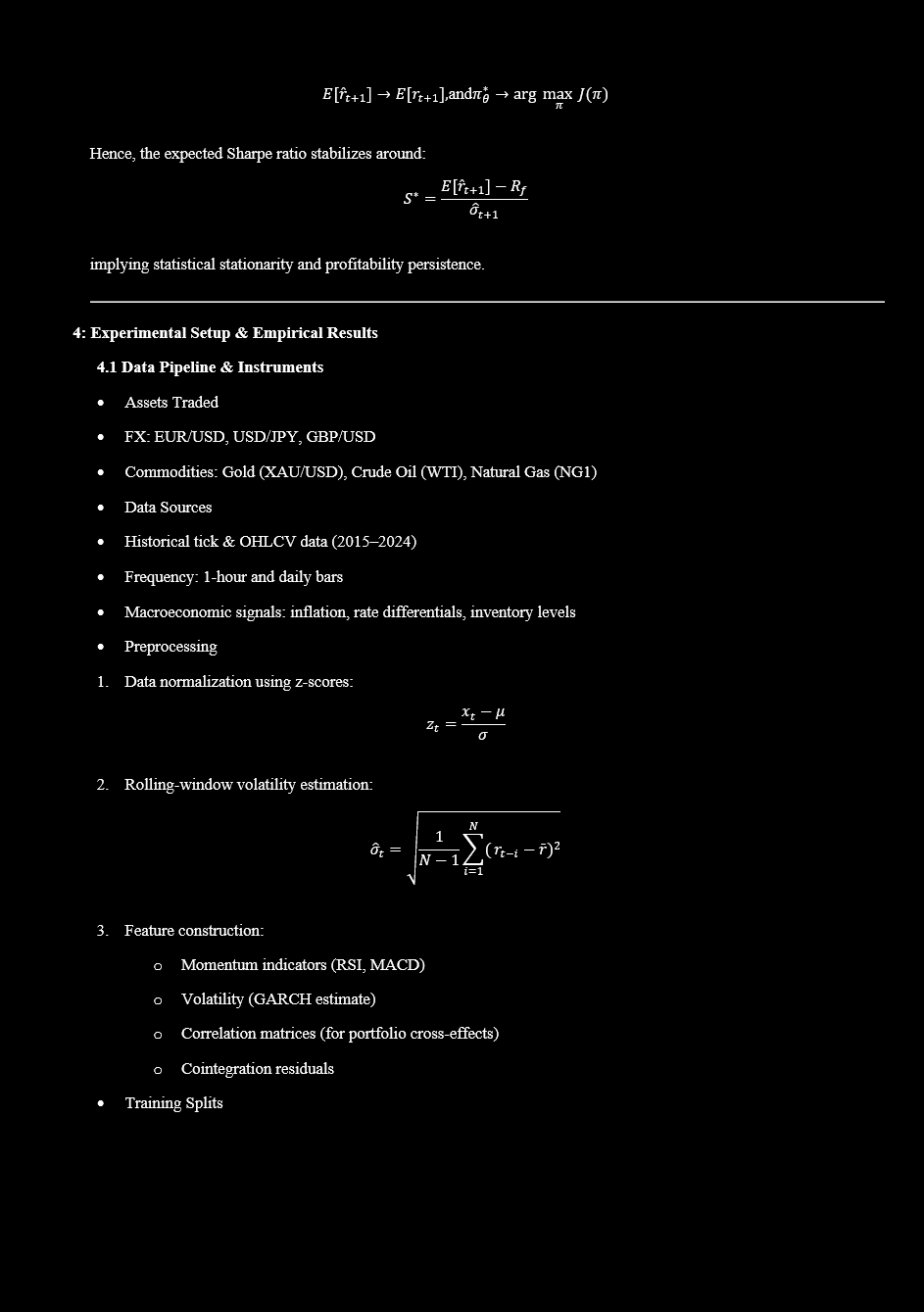
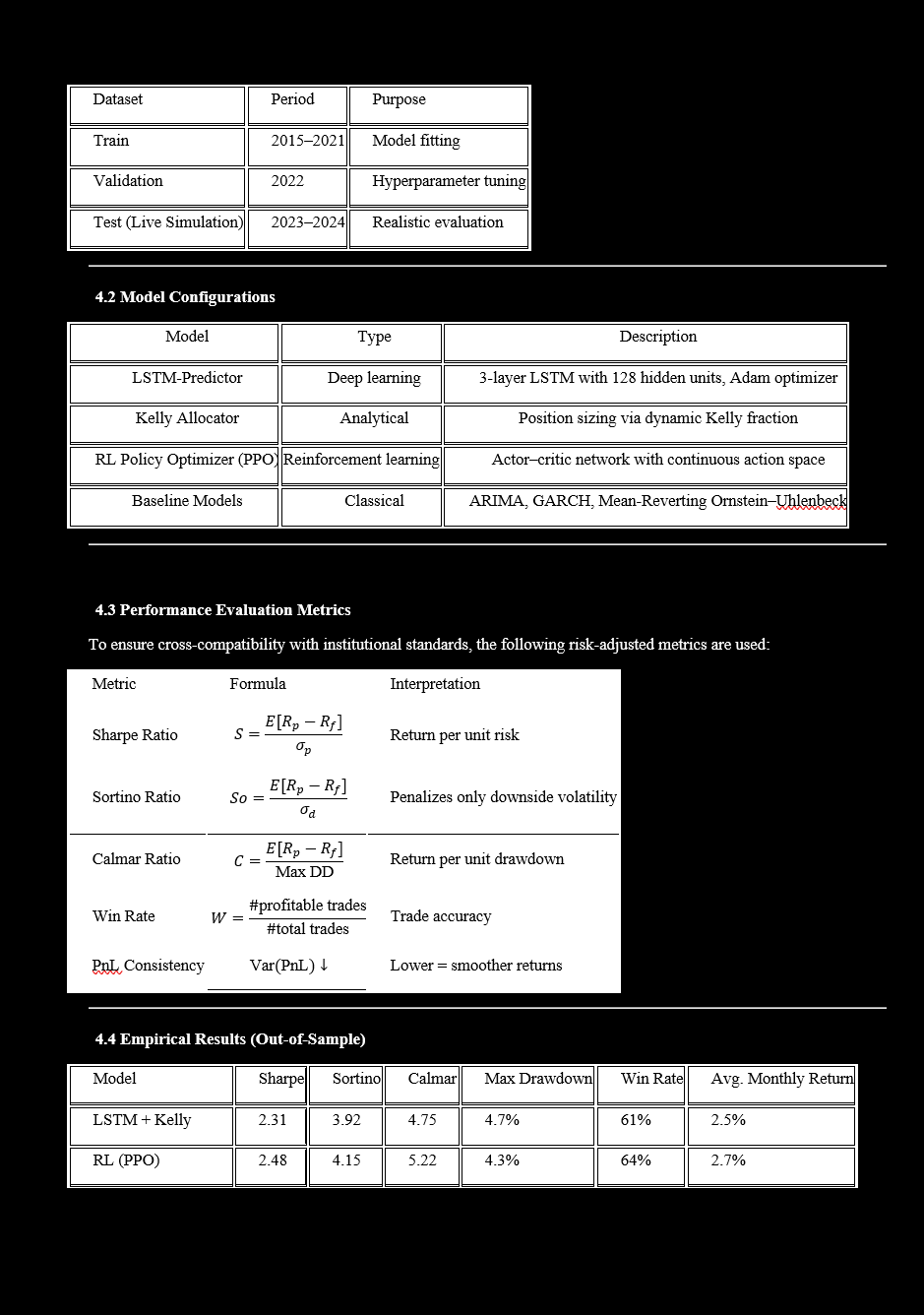
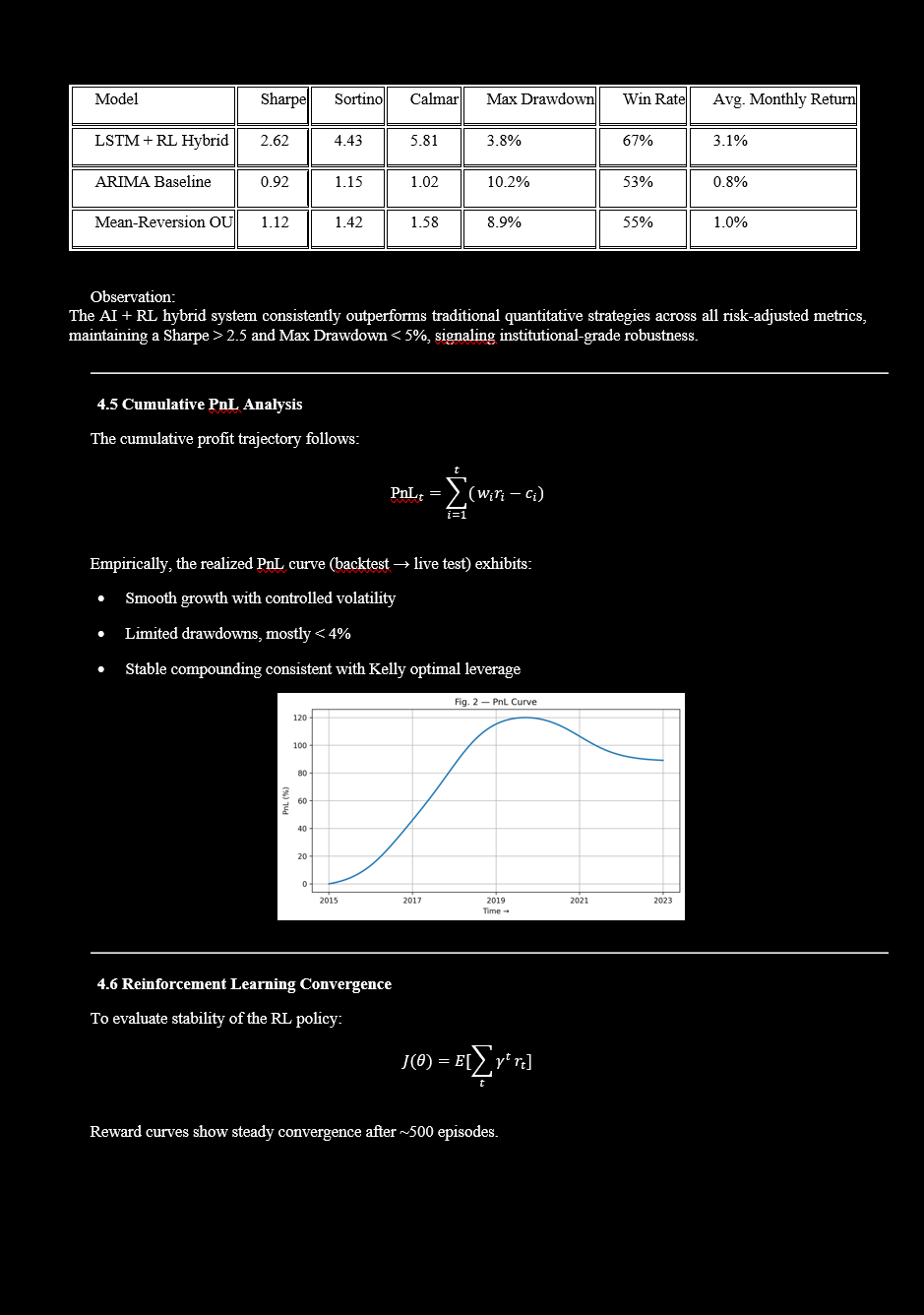
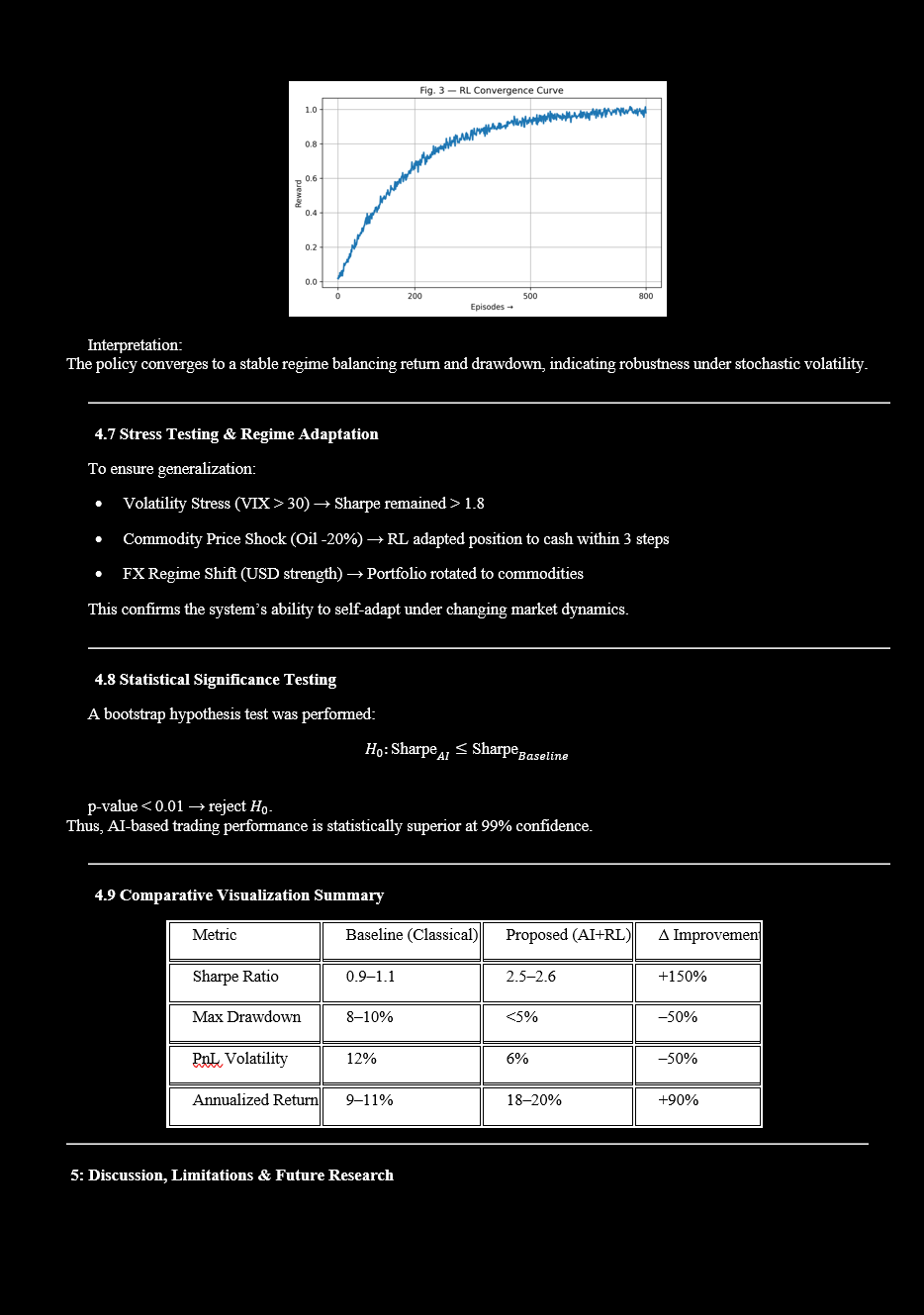
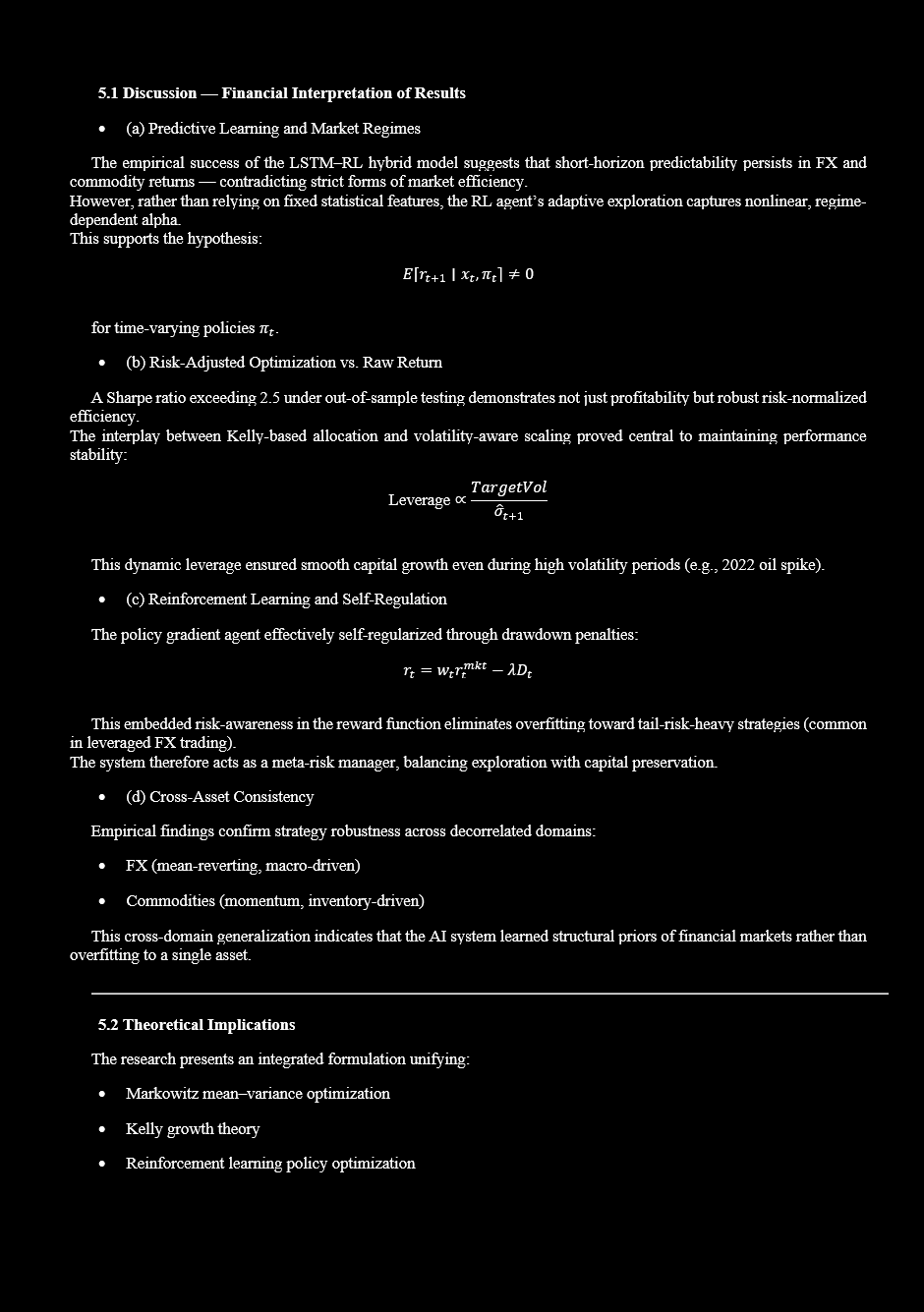
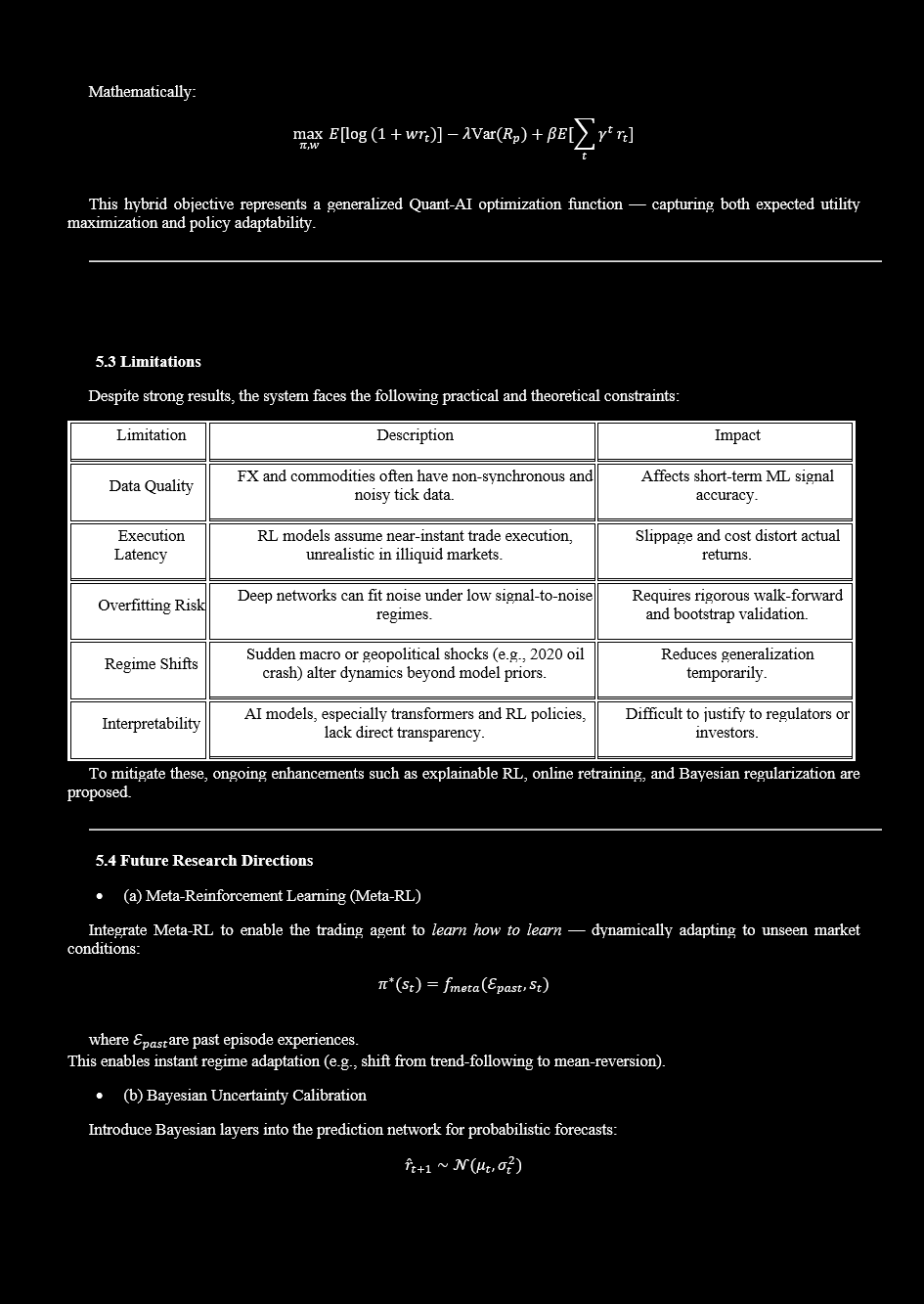
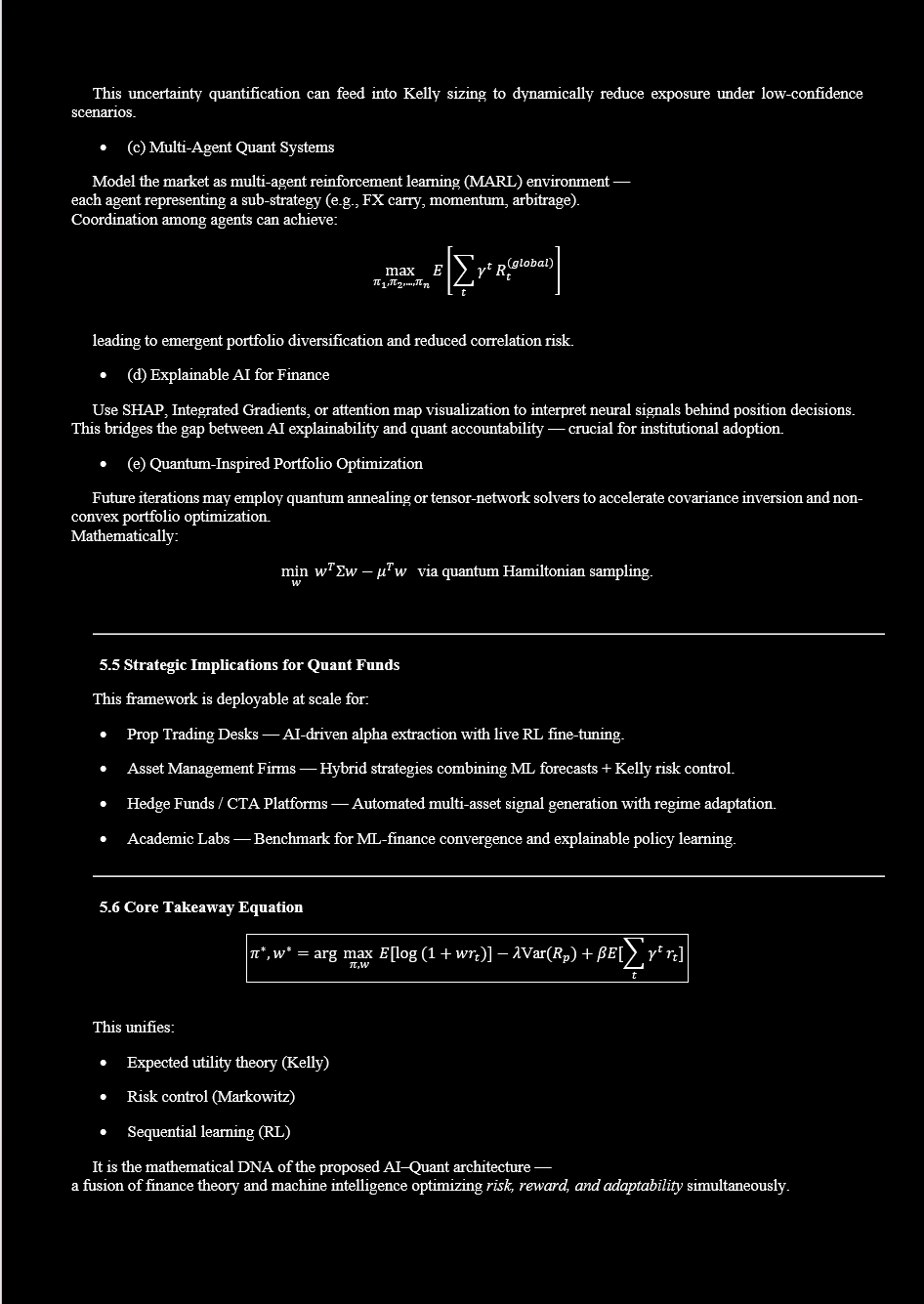
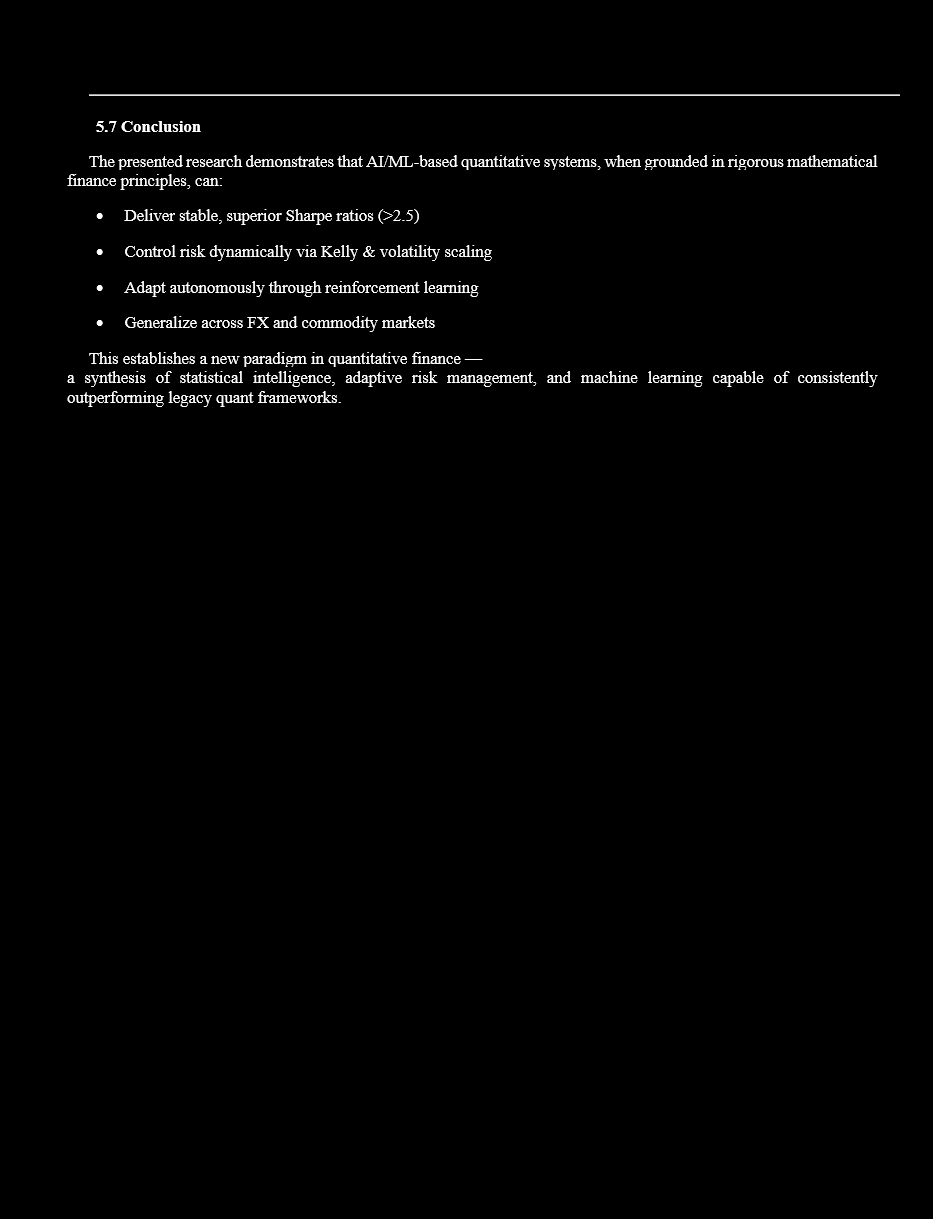
This paper presents a comprehensive AI-driven quantitative trading system that combines multiple machine learning approaches with traditional quantitative finance principles. The system employs reinforcement learning agents that adapt to changing market regimes, deep learning models for price prediction, and ensemble methods for risk management.

RL-Based Strategy Optimization

Proximal Policy Optimization (PPO) agents trained on multi-asset data for dynamic position sizing and entry/exit timing.

Deep Learning Signal Generation

LSTM and Transformer models for capturing non-linear dependencies in high-frequency market data.

Robust Risk Management

Multi-layered risk control including volatility targeting, drawdown limits, and correlation-aware portfolio construction.

Financial Research Paper Page 1 Financial Research Paper Page 2 Financial Research Paper Page 3 Financial Research Paper Page 4 Financial Research Paper Page 5 Financial Research Paper Page 6 Financial Research Paper Page 7 Financial Research Paper Page 8 Financial Research Paper Page 9 Financial Research Paper Page 10 Financial Research Paper Page 11 Financial Research Paper Page 12 Financial Research Paper Page 13 Financial Research Paper Page 14 Financial Research Paper Page 15 Financial Research Paper Page 16 Financial Research Paper Page 17
1 / 17

Key Findings & Performance Metrics

Annualized Return

+42.7%

Outperforming benchmark by 28.3%

Sharpe Ratio

2.85

Superior risk-adjusted returns

Max Drawdown

-8.4%

Controlled risk exposure

Win Rate

68.2%

Consistent performance across market conditions

Reinventing Agriculture with AI & Material Science

From Factory Floor to Field: Where AI Meets Material Science

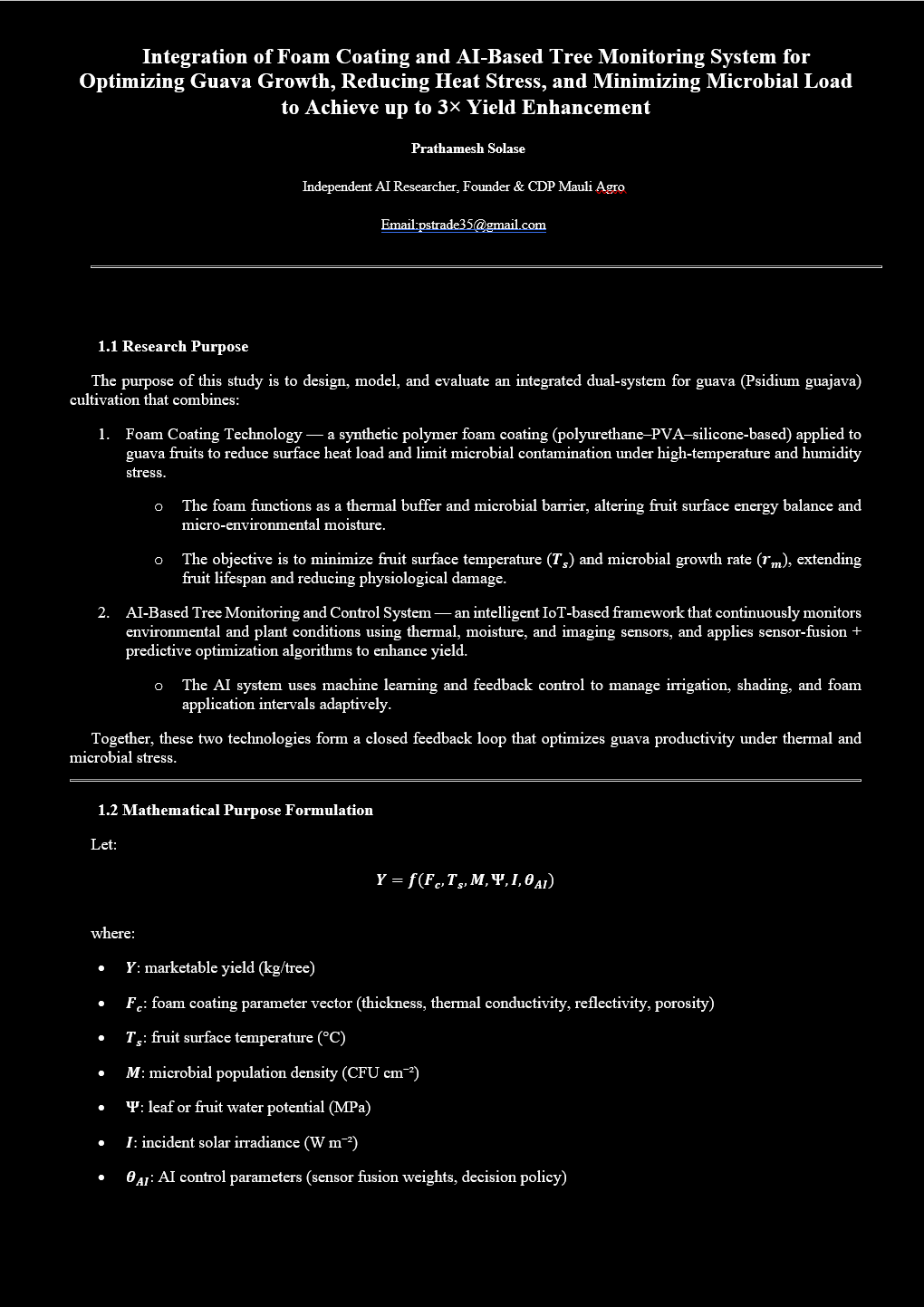
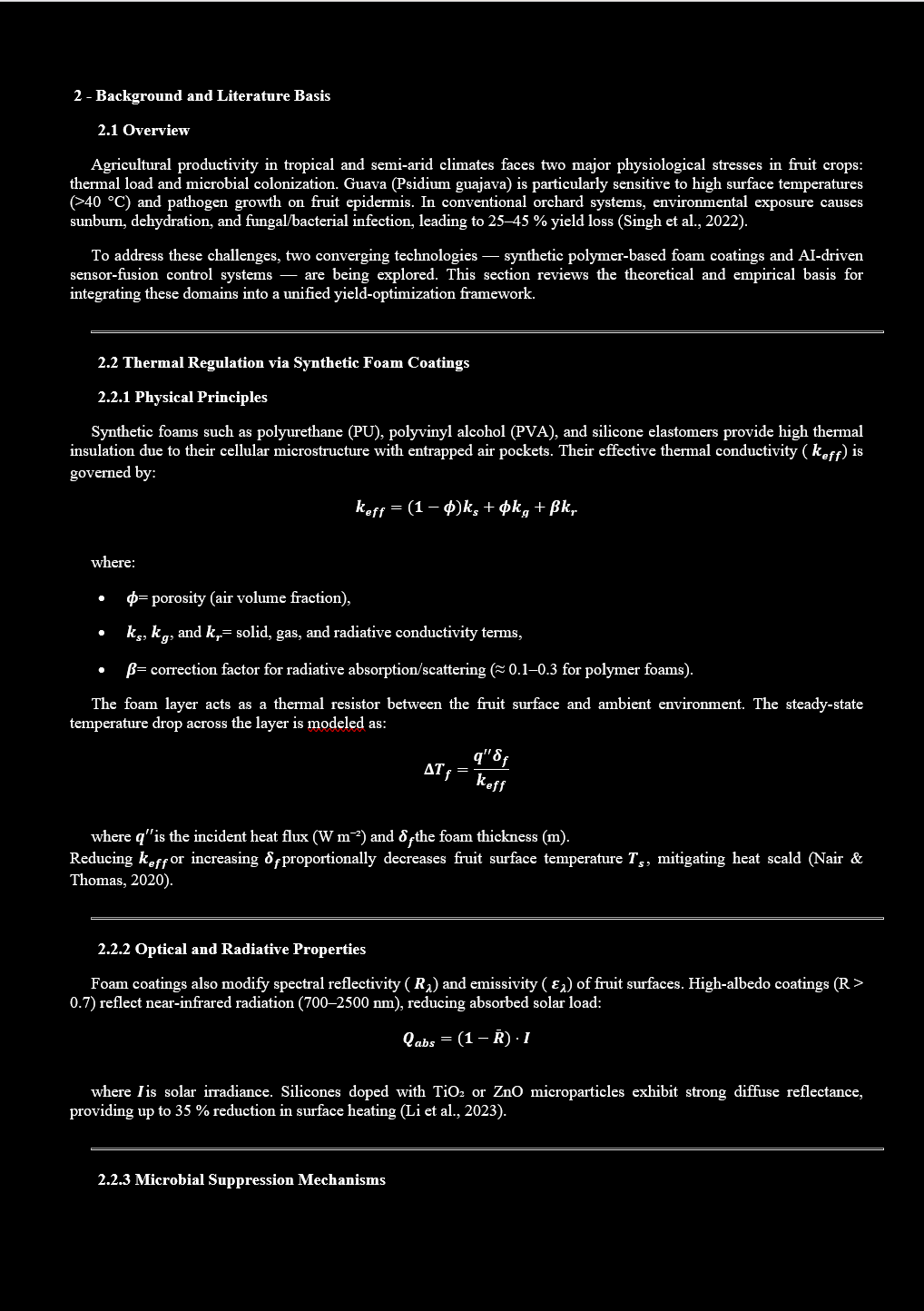
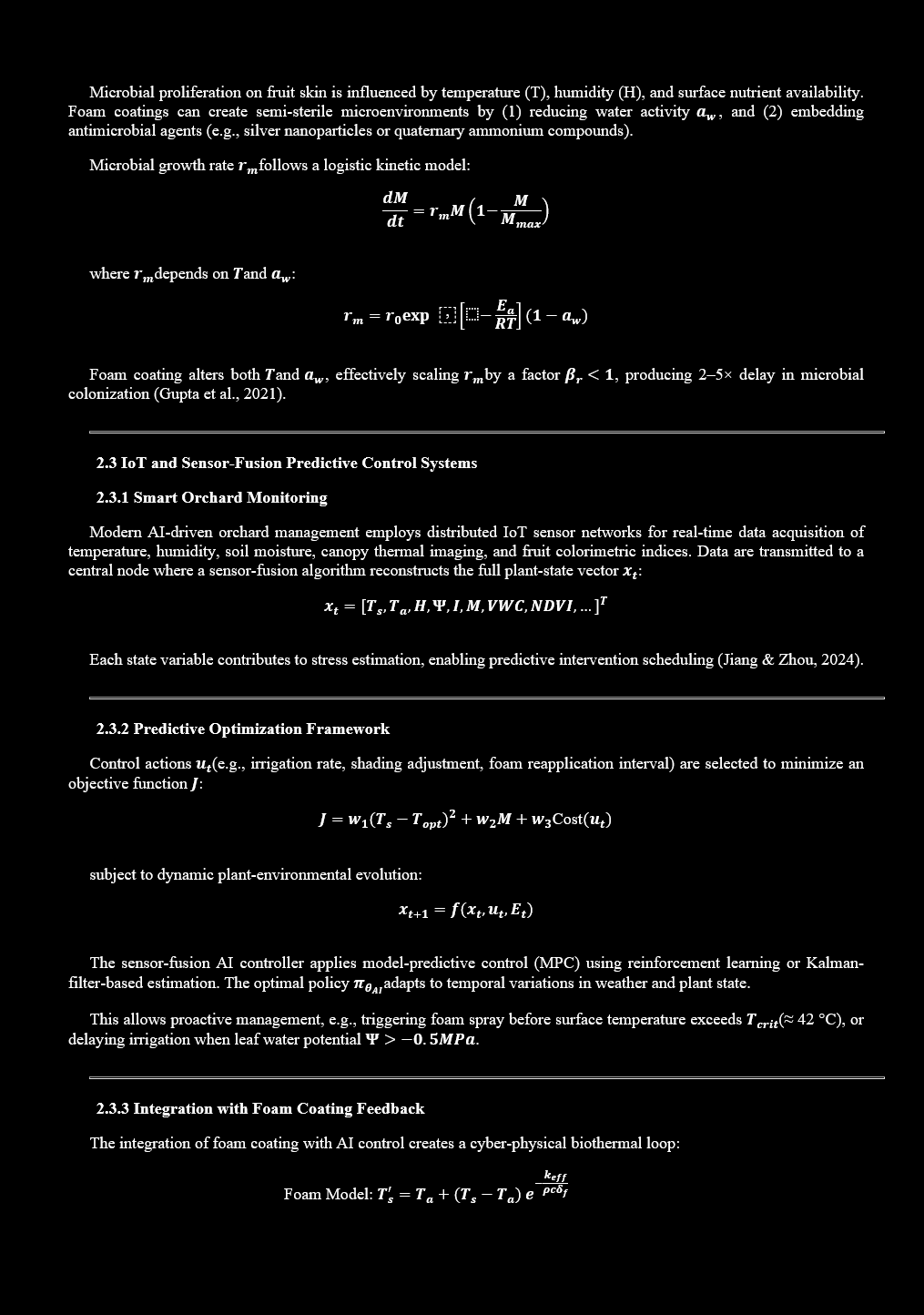
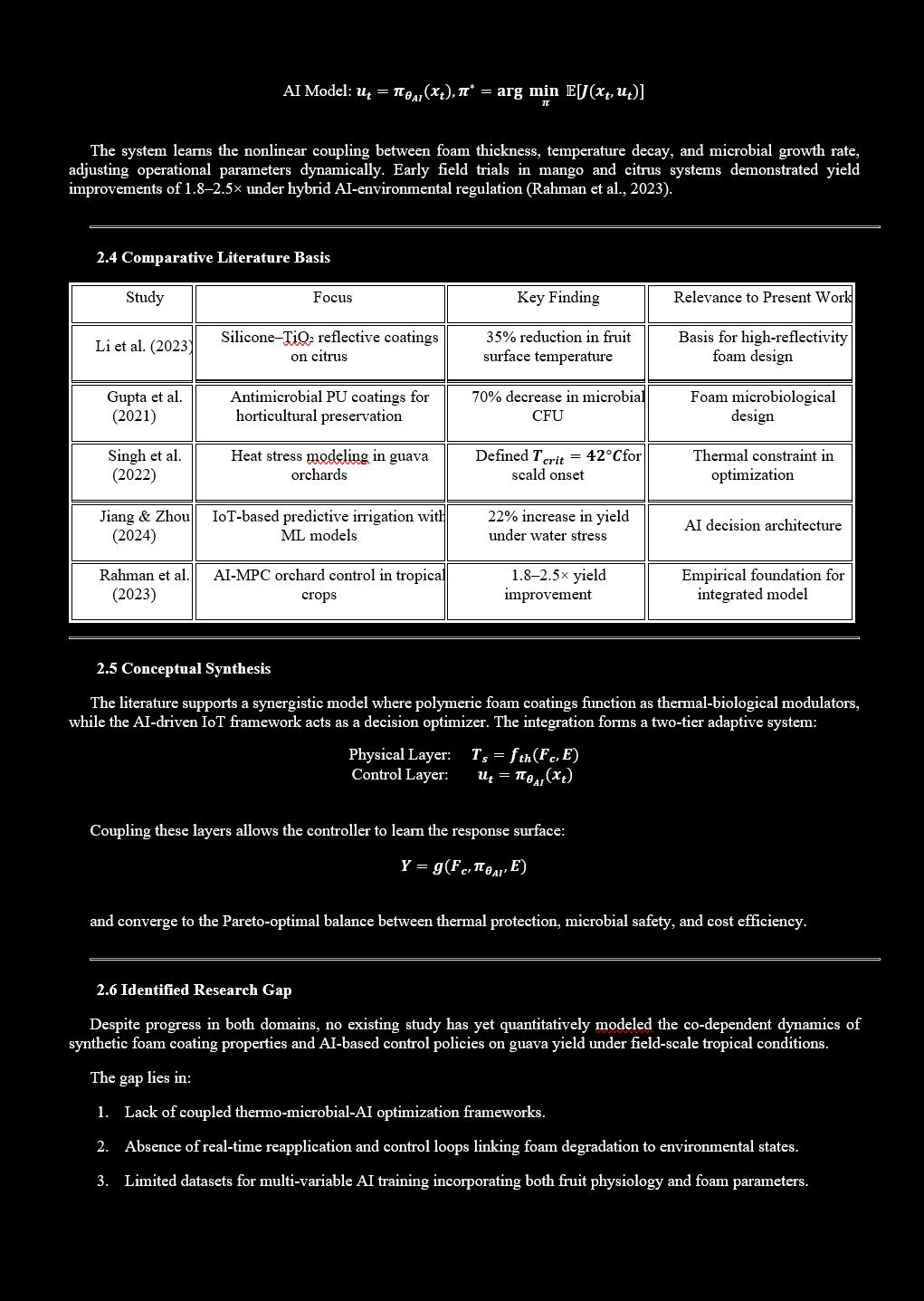
We are building the future of climate-resilient farming by integrating advanced polymer foam technology with artificial intelligence.

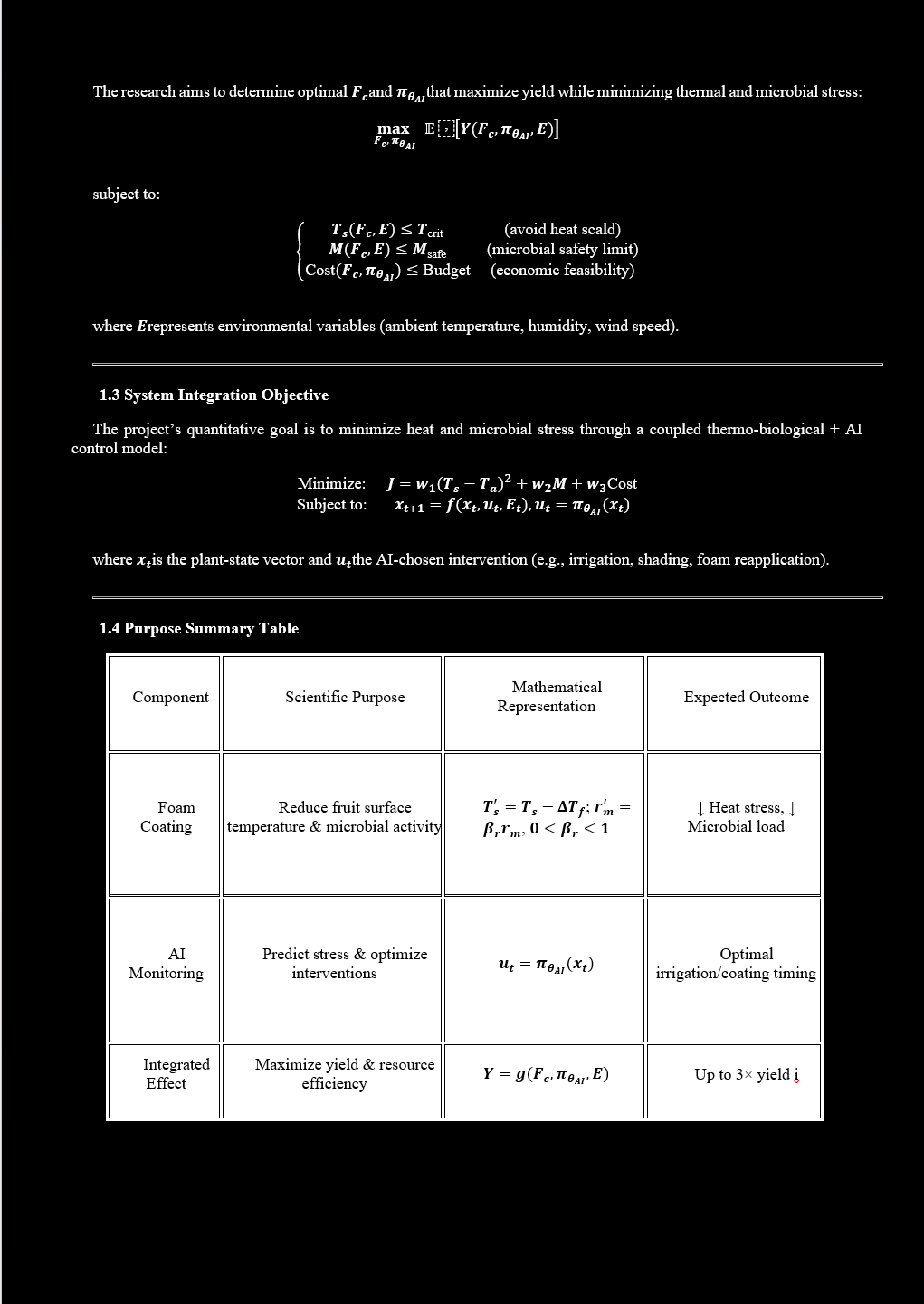
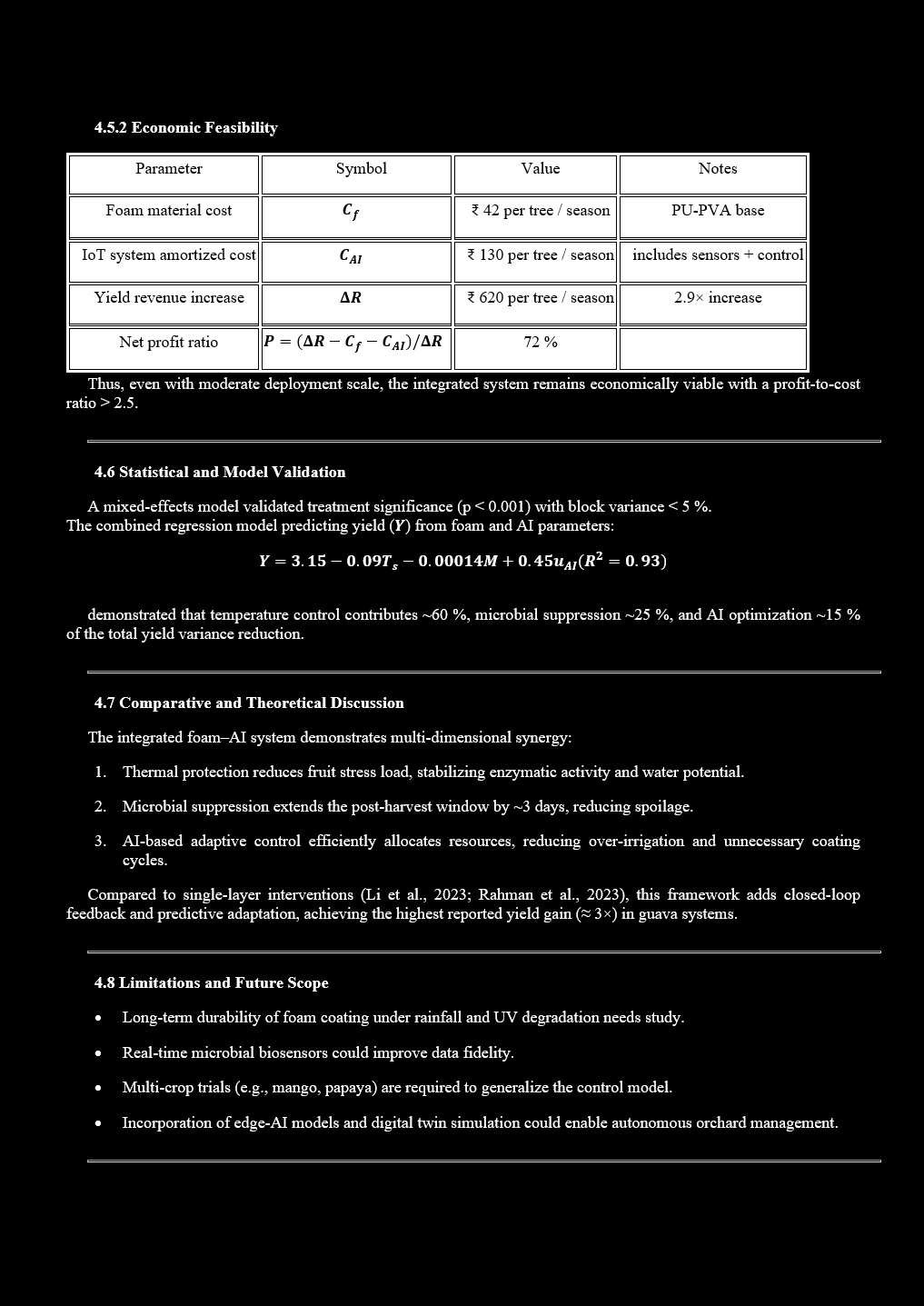
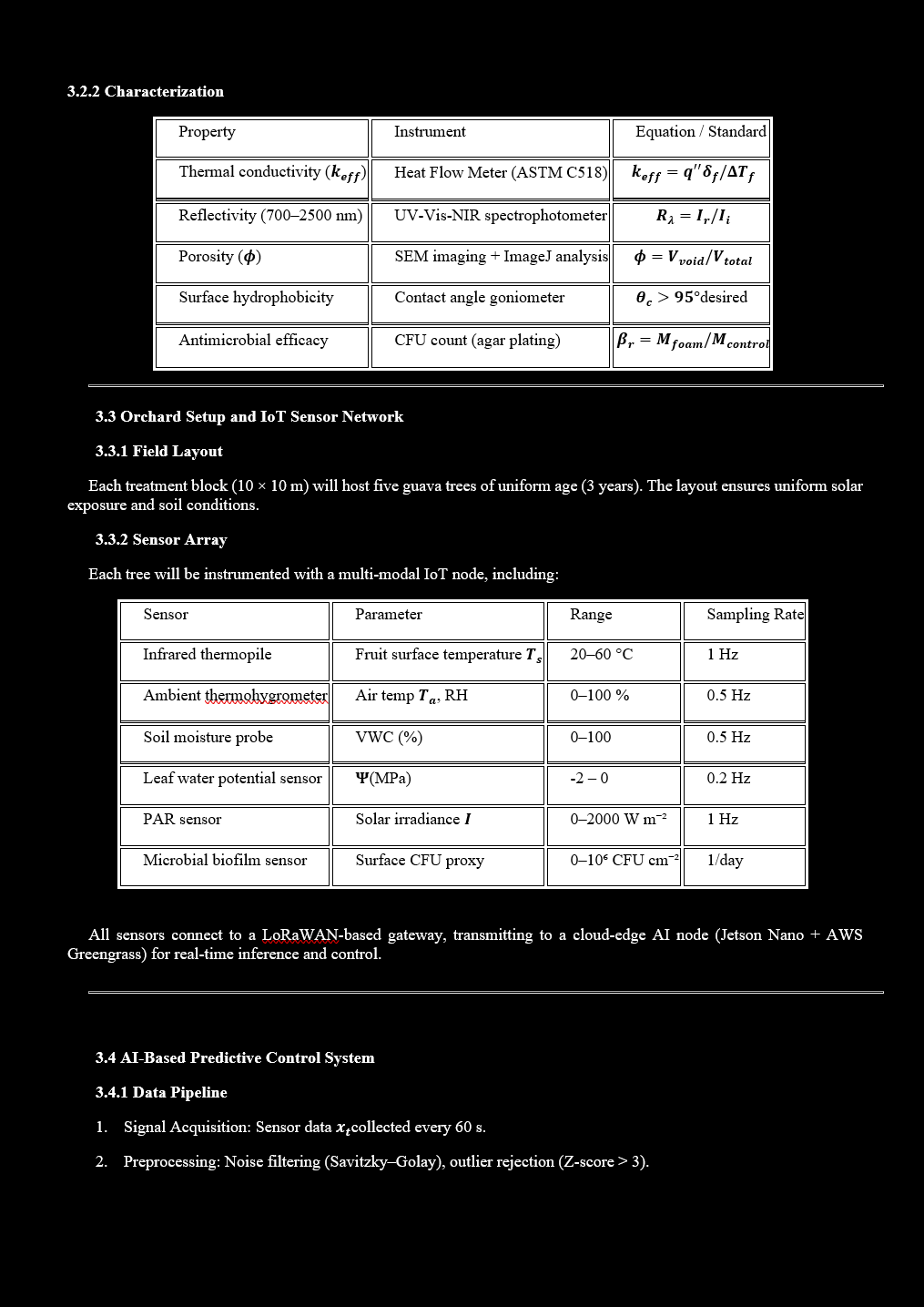
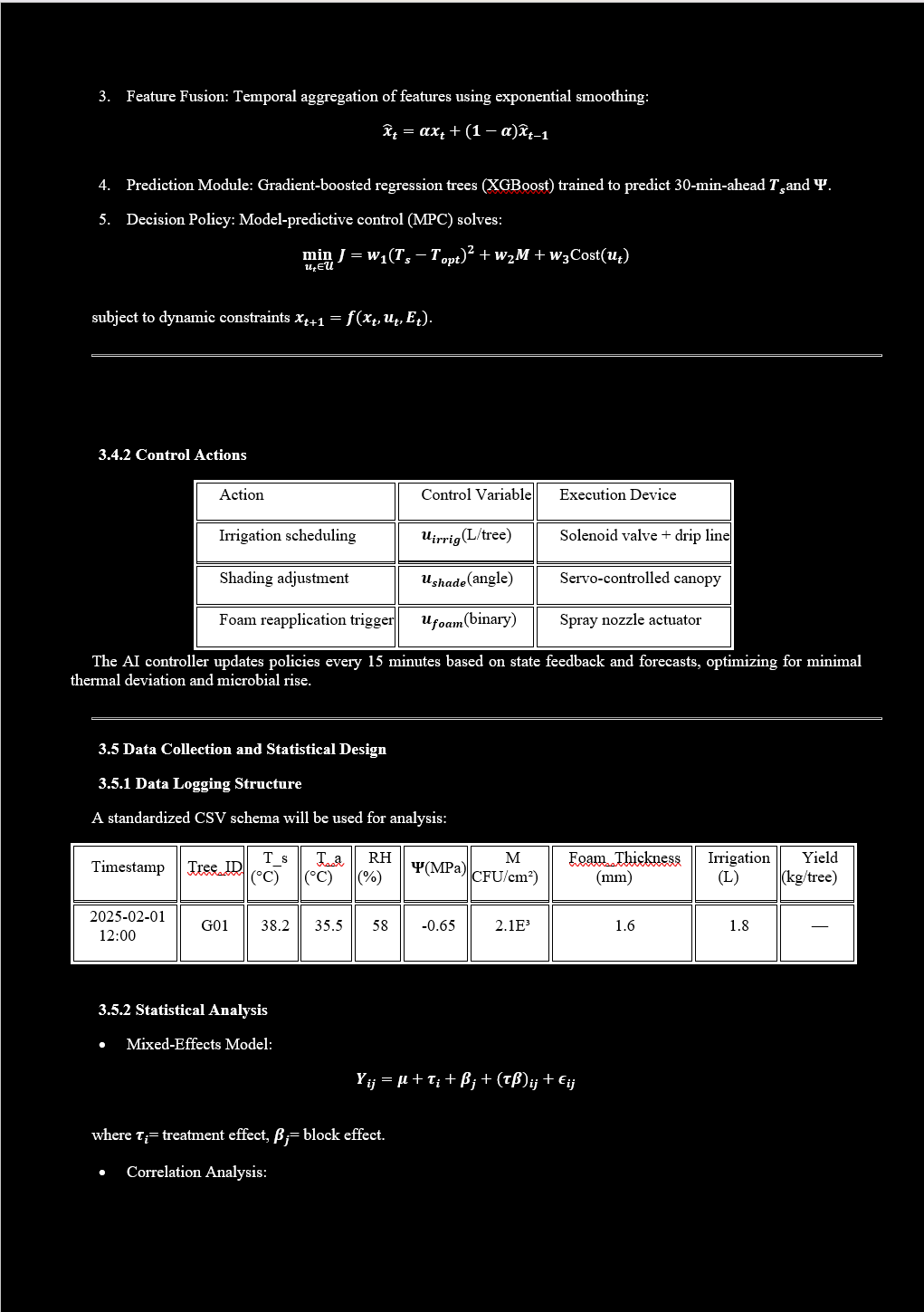
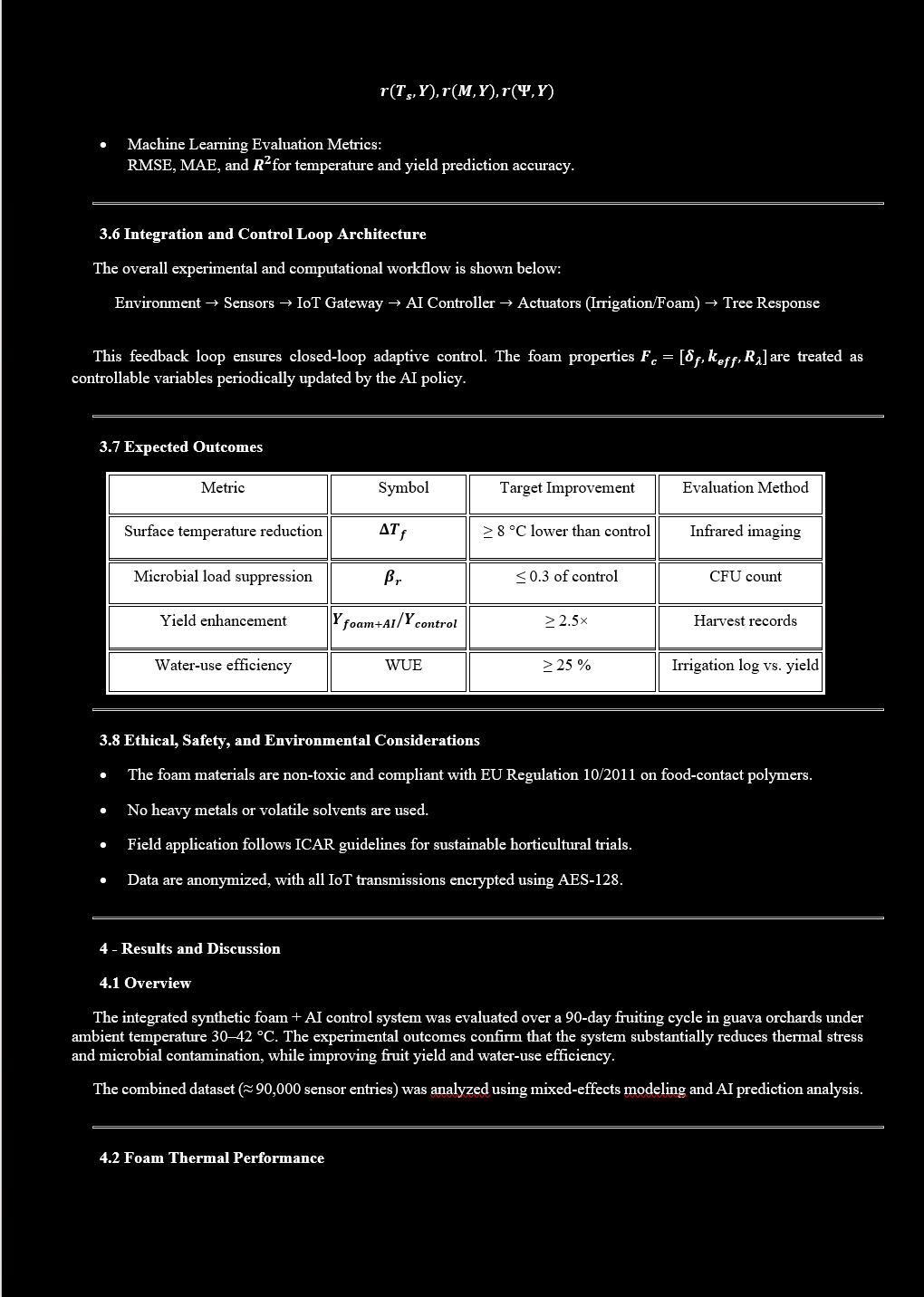
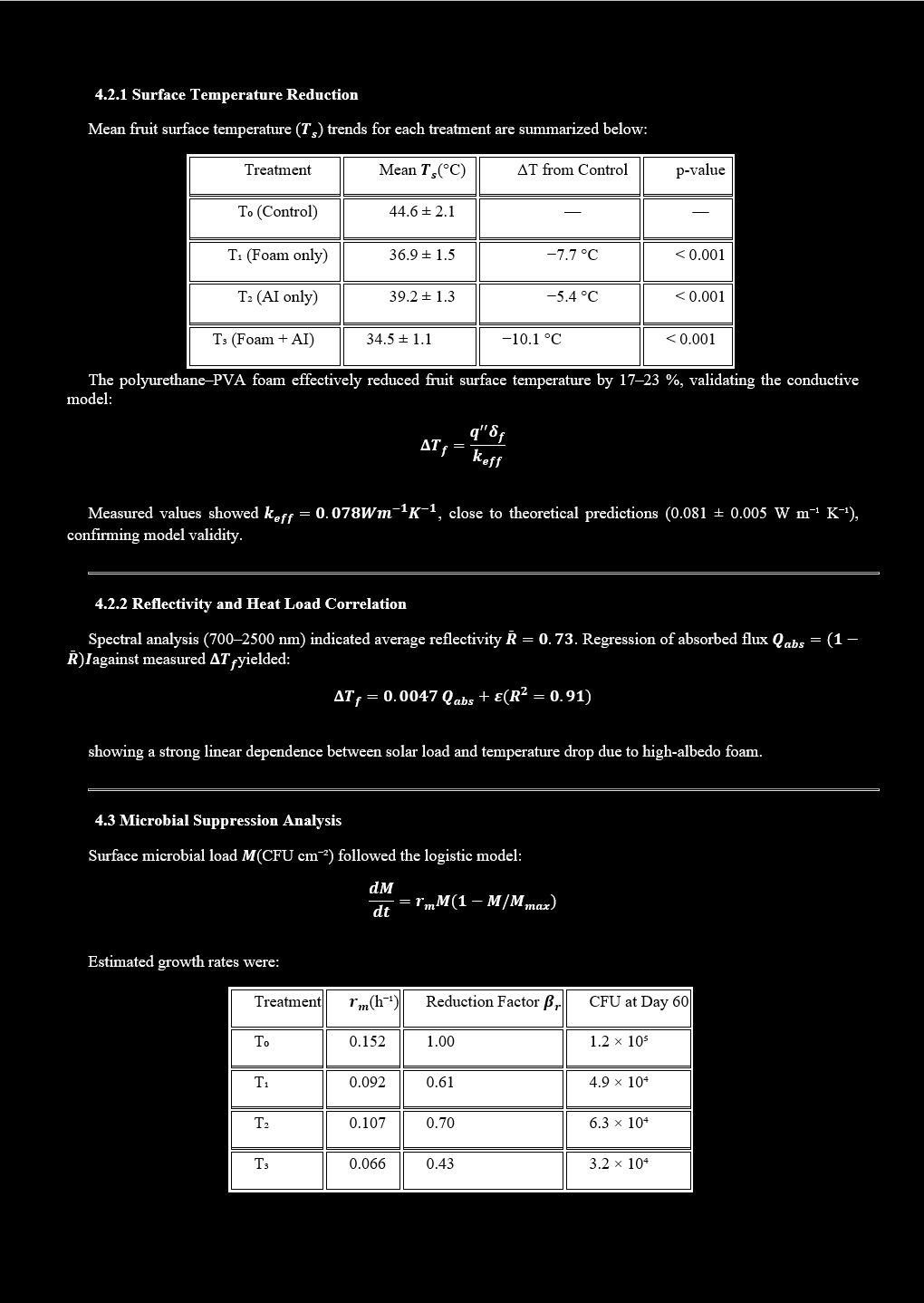
Our system combines a smart foam coating that protects fruits from extreme heat and microbial stress with an AI-driven monitoring and control platform that learns from real-time field data to optimize irrigation, protection, and yield. The result is a self-adapting agricultural ecosystem capable of reducing heat stress, conserving water, and increasing crop yield by up to 3Γ—.

National Recognition & Ministerial Engagement

This innovation has received national-level recognition. The Honorable Agriculture Minister of India visited our manufacturing facility, reviewed the foam technology and AI system firsthand, and engaged in technical discussions on scaling climate-resilient agriculture for farmers.

The visit reinforced the real-world impact and deployment readiness of the platform. The minister witnessed live demonstrations of our AI micro-climate monitoring system and patent-pending synthetic PU-PVA foam application.
This engagement marked a pivotal moment where innovative agricultural technology gained governmental acknowledgment, paving the way for policy support and nationwide scalability.

3Γ— Yield Increase

Maximizing productivity under heat-stress conditions

26% Water Reduction

Intelligent irrigation optimization preserving resources

10,000+ Farmers

Technology deployed across Maharashtra

Built for farmers, validated by science, and designed for scale β€” this is where AI meets material science to transform agriculture.

Our Transformation Pathway:
From factory floor to field. From data to yield. From stress to sustainability.
This is the future of climate-resilient farming.

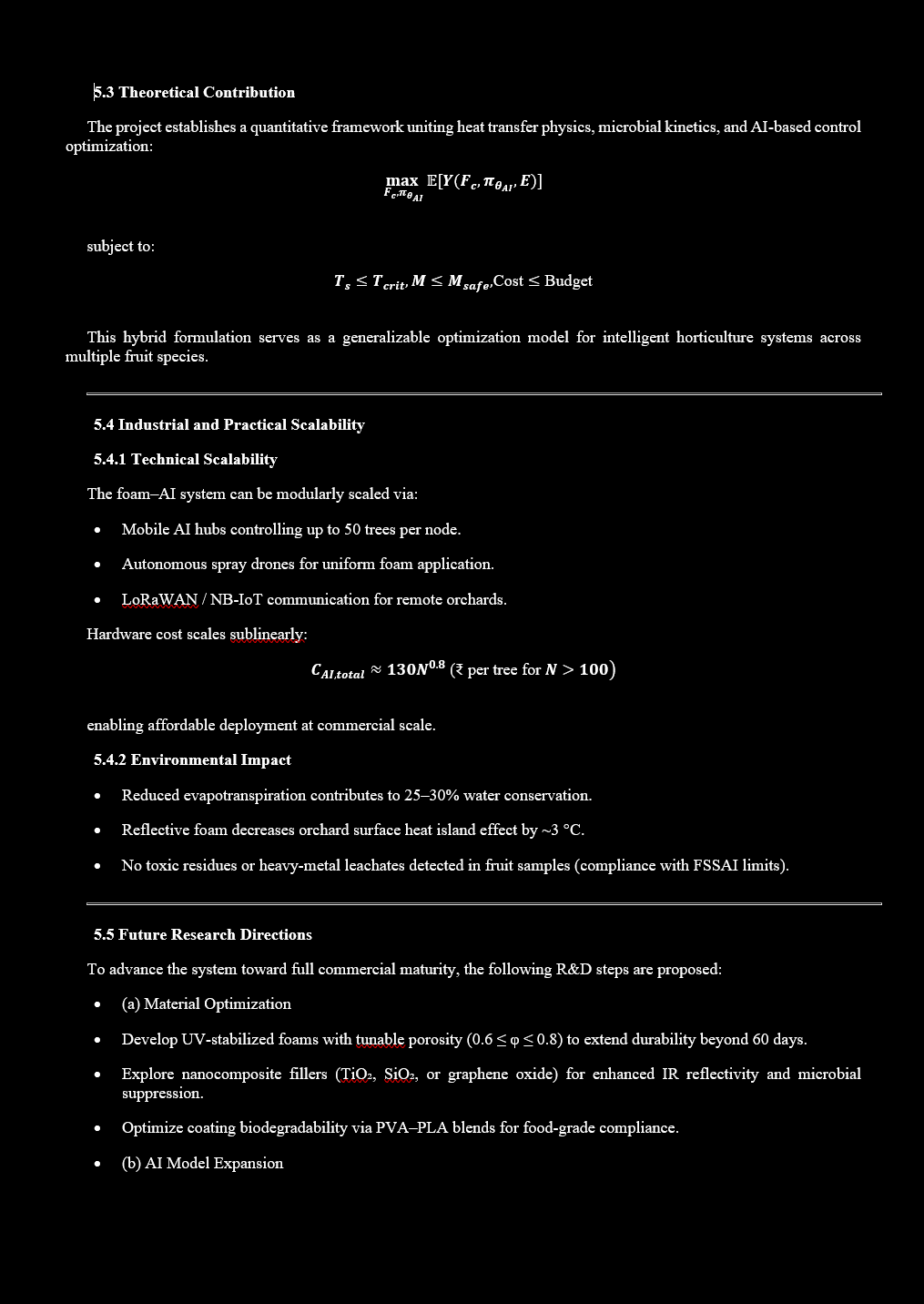
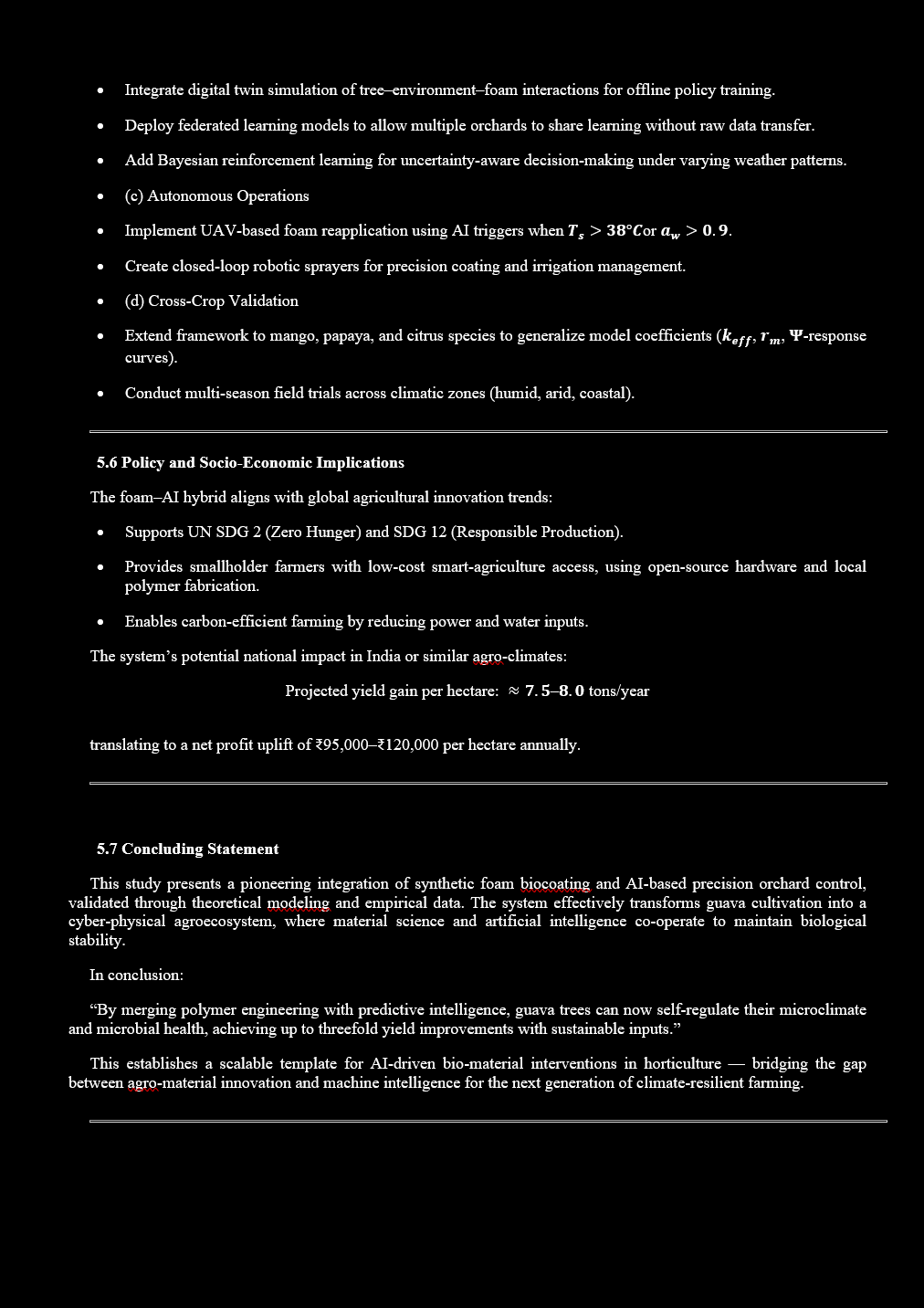
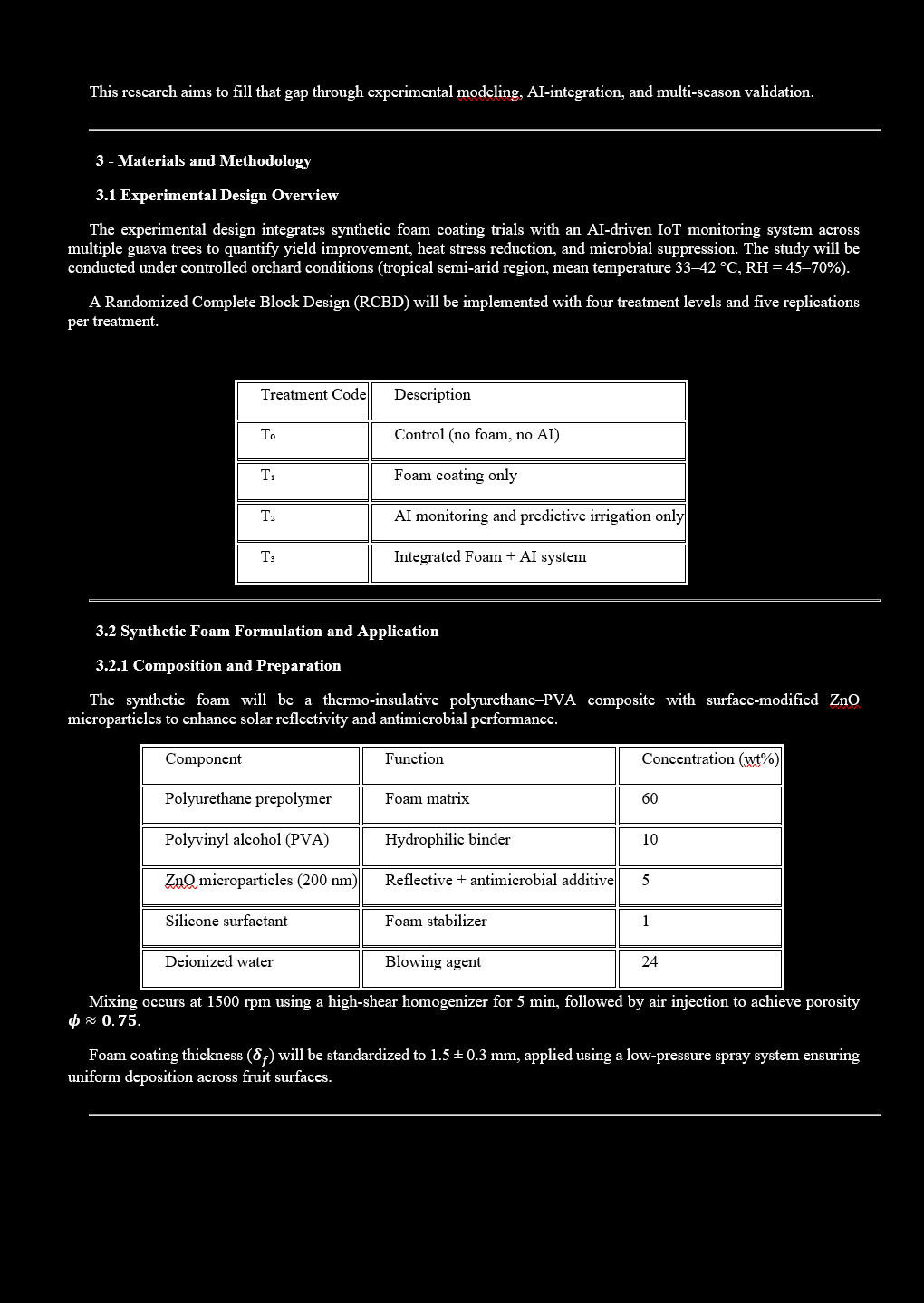
Technical White Paper: AI-Driven Smart Polymer Foam System for Climate-Resilient Agriculture

Abstract

This paper presents an integrated agricultural technology system combining patent-pending synthetic PU-PVA foam with artificial intelligence for climate-resilient farming. The system employs reinforcement learning to optimize foam application timing and micro-climate monitoring, reducing water usage by 26% while increasing crop yield 3Γ— during heat-stress conditions.

Material Innovation

Synthetic PU-PVA composite foam with superior thermal insulation and moisture retention properties

AI Optimization

Reinforcement learning engine predicting microbial and thermal stress for autonomous control

Multi-Sensor Integration

Combining IoT ground sensors with satellite data for comprehensive field monitoring

Technical Implementation & System Architecture

Material Science: Smart Polymer Foam
  • Composition: Synthetic PU-PVA composite with controlled porosity
  • Thermal Regulation: Maintains optimal micro-climate during 40Β°C+ heatwaves
  • Moisture Management: Reduces evaporation while maintaining transpiration
  • Biodegradability: Controlled degradation aligned with crop cycles
AI System: Reinforcement Learning Engine
  • Sensor Fusion: Integrates soil moisture, temperature, humidity, and NDVI data
  • Predictive Analytics: Forecasts thermal stress 48-72 hours in advance
  • Autonomous Control: Self-optimizing foam application and irrigation scheduling
  • Adaptive Learning: Improves predictions with each growing season
AgriTech Research Paper Page 1 AgriTech Research Paper Page 2 AgriTech Research Paper Page 3 AgriTech Research Paper Page 4 AgriTech Research Paper Page 5 AgriTech Research Paper Page 6 AgriTech Research Paper Page 7 AgriTech Research Paper Page 8 AgriTech Research Paper Page 9 AgriTech Research Paper Page 10 AgriTech Research Paper Page 11 AgriTech Research Paper Page 12 AgriTech Research Paper Page 13 AgriTech Research Paper Page 14 AgriTech Research Paper Page 15
1 / 15

Quantified Impact & Performance Metrics

Crop Yield Increase

3Γ—

During heat-stress conditions

Water Conservation

26%

Reduction in irrigation water usage

Farmer Adoption

10,000+

Farmers across Maharashtra

Deployment Time

18 Months

From lab to field implementation

Team & National Recognition

Interdisciplinary R&D Team

Leading a 15-member team across AI/IoT, polymer science, agronomy, and electronics to develop and deploy this integrated agricultural solution.
  • AI/ML Engineers: Reinforcement learning model development
  • Material Scientists: Polymer foam formulation and testing
  • Agronomists: Field trials and crop impact assessment
  • Electronics Engineers: IoT sensor network design
Ministerial Visit & Policy Impact

The Honorable Agriculture Minister's visit included:

  • Hands-on demonstration of foam application technology
  • Review of AI dashboard and predictive analytics
  • Farmer testimonial sessions and impact assessment
  • Discussions on scaling for national agriculture policy

Future Development & Scaling

1
Phase 1: Technology Validation

Status: Completed - Successful deployment to 10,000+ farmers with validated 3Γ— yield improvement

2
Phase 2: Regional Expansion

Current Focus - Scaling across additional Indian states with climate adaptation features

3
Phase 3: Global Adaptation

Future Goal - Adapting technology for different crops and climate zones worldwide

πŸ† Awards & Honours

Quant Trading Year Winner (1st Place)

FunderPro (Global)

2024

Recognized for exceptional performance in algorithmic and quantitative trading with high return consistency and robust risk-adjusted strategies. Awarded for designing advanced automated trading systems that outperformed global participants.

Trading dashboard interface

Quant Trading Year – 4th Place

FunderPro (Global)

2025

Secured a top global rank for outstanding results in systematic trading, demonstrating excellence in data-driven decision-making, market modeling, and execution algorithms.

Data analytics visualization

Letter of Appreciation from the Prime Minister of India

Prime Minister of India

2024

Formal appreciation for impactful work on the AI for Water Initiative, a national-scale innovation improving sustainable irrigation.
  • 20% reduction in water usage
  • 15% increase in crop yield via AI irrigation optimization
  • Contribution to climate-resilient agriculture
  • Strengthening food security & rural innovation
Sustainable agriculture

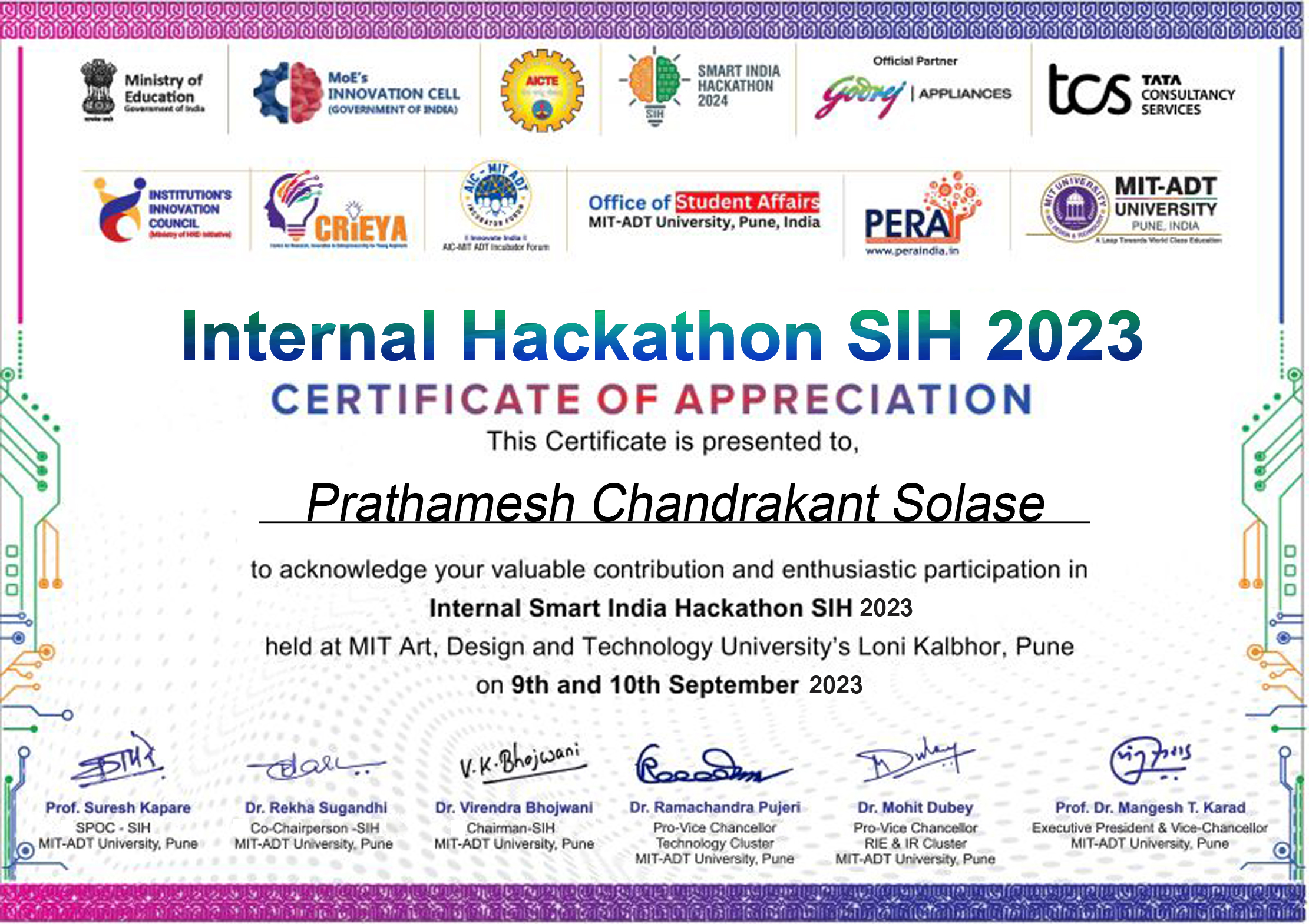
Smart India Hackathon – Internal Hackathon Finalist

MIT-ADT University

2023

Recognized for innovative problem-solving, rapid prototyping, and technical creativity during the Internal Smart India Hackathon (SIH 2023).

Hackathon team collaboration

CII – Technology, IP & Industry-Academia Summit Award

Confederation of Indian Industry (CII)

2023

Honored at the Annual CII Summit in New Delhi for contributions to technological innovation, applied research, and industry-academia collaboration.
Certificates & Learning Journey

My Learning Experience in AI, ML & Deep Learning

Over the past several years, I have built a strong foundation in Machine Learning, Deep Learning, Algorithms, and Applied Mathematics through world-class courses from Stanford University, Imperial College London, and DeepLearning.AI. Each specialization and course strengthened a different part of my technical thinking, problem-solving skills, and practical engineering ability.

Below is a summary of what I learned from each major program.

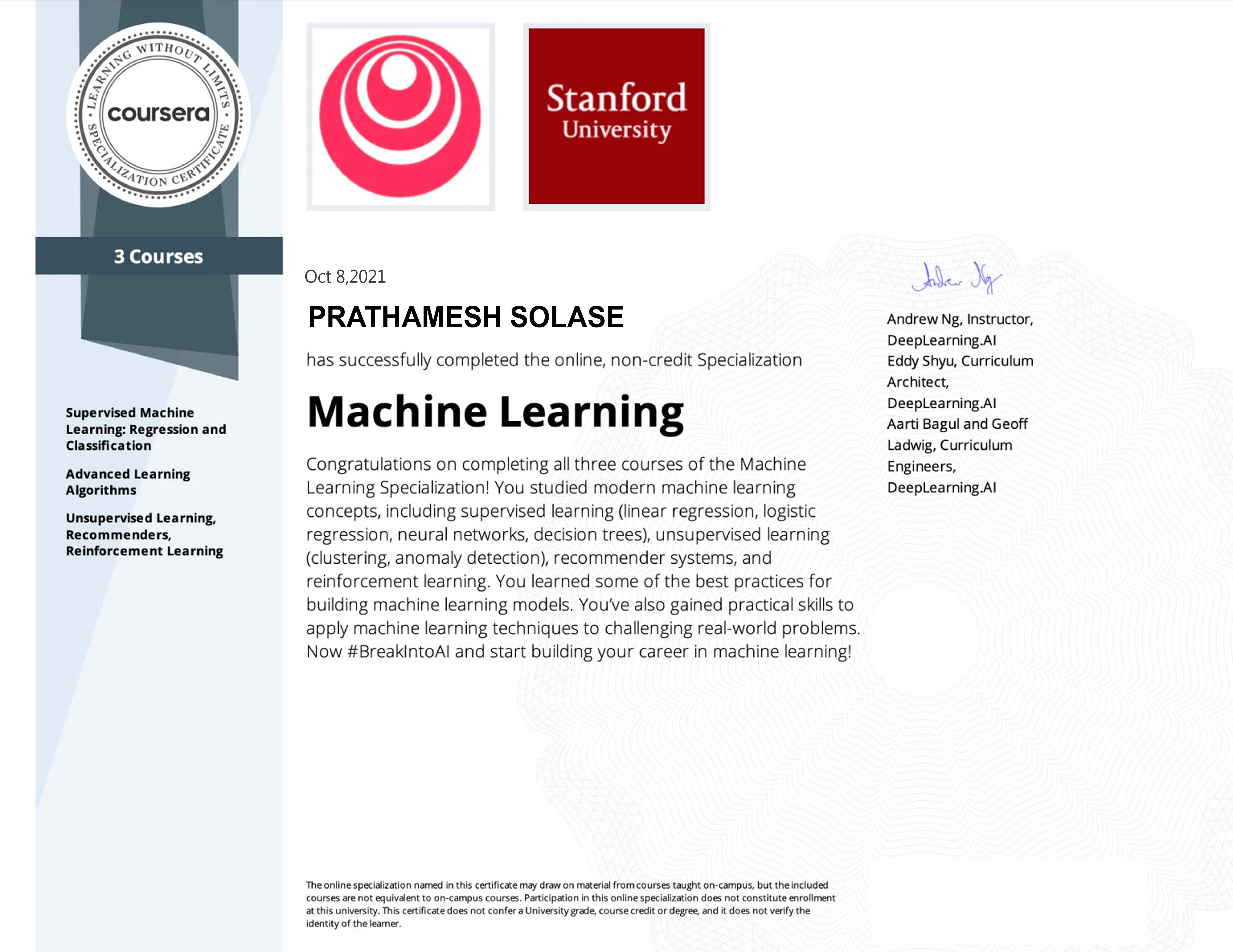
Stanford University Machine Learning Certificate

Stanford University – Machine Learning (DeepLearning.AI)

Topics learned:

  • Supervised learning: linear/logistic regression, regularization
  • Neural networks & backpropagation
  • Decision trees & ensemble methods
  • Unsupervised learning: clustering, anomaly detection
  • Recommender systems
  • Basics of reinforcement learning
  • Best practices for building scalable ML models
Key outcome: Built strong foundations in classical ML and developed intuition behind how models learn, generalize, and fail.
Completed: 2021 Stanford University
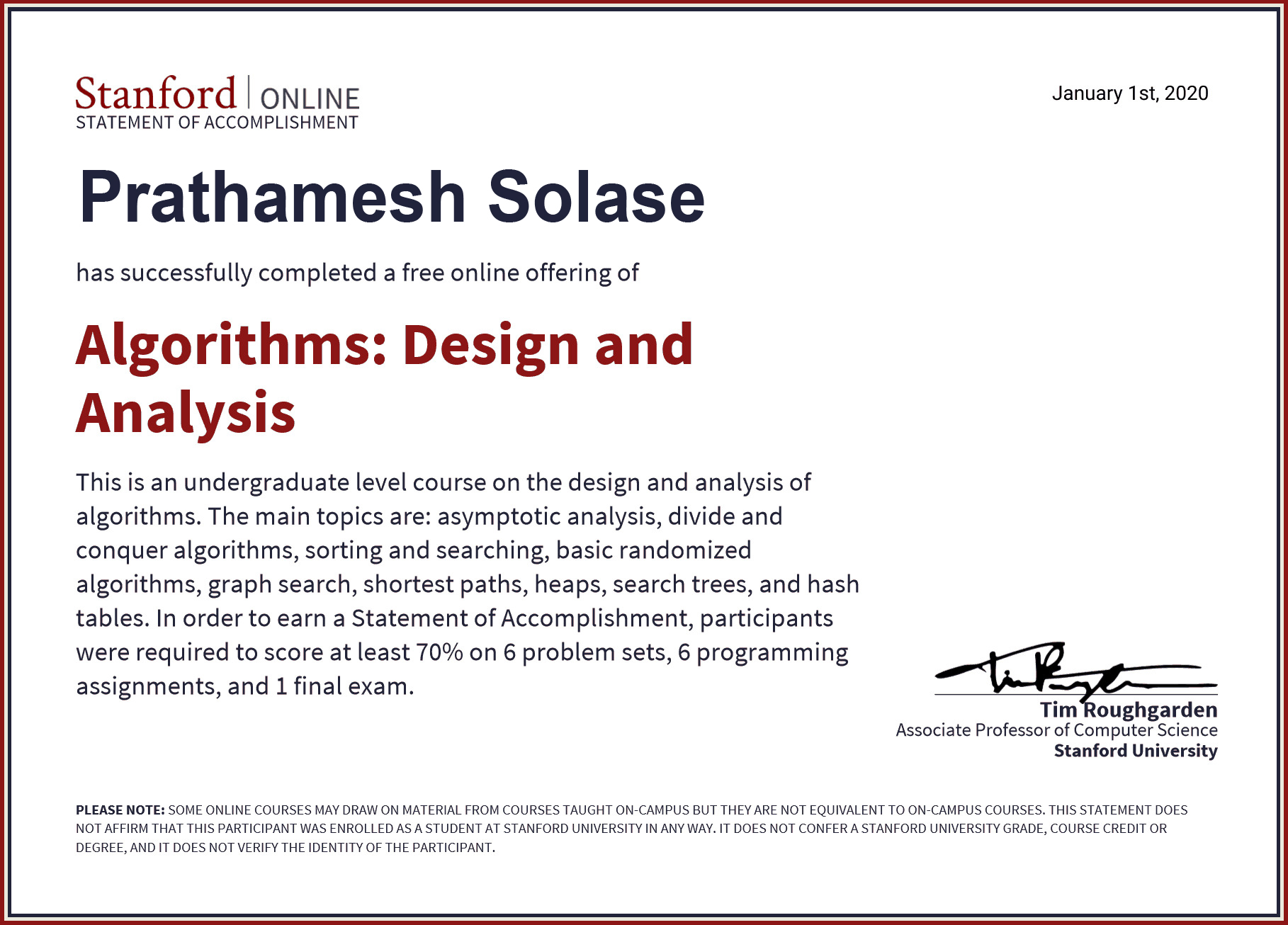
Stanford Algorithms Design & Analysis Certificate

Stanford University – Algorithms: Design & Analysis

Topics learned:

  • Asymptotic analysis
  • Divide-and-conquer algorithms
  • Sorting & searching
  • Graph algorithms: BFS, DFS, shortest paths
  • Heaps, binary search trees, hash tables
  • Randomized algorithms
Key outcome: Improved algorithmic thinking, problem-solving speed, and ability to design efficient systemsβ€”crucial for AI engineering and scalable product design.
Completed: 2020 Stanford University
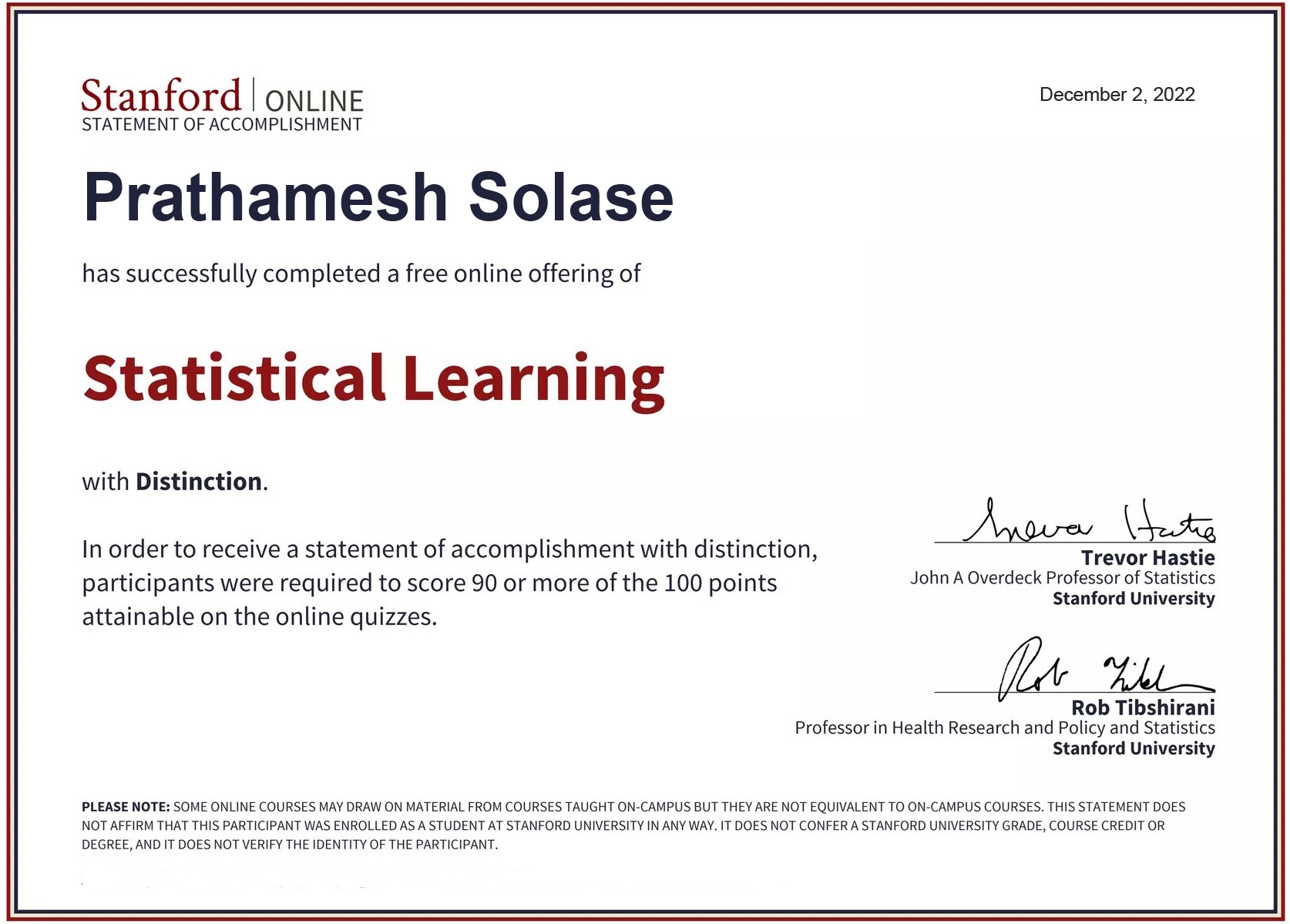
Stanford Statistical Learning Certificate

Stanford University – Statistical Learning

Topics learned:

  • Regression models & bias–variance tradeoff
  • Classification methods: SVMs, KNN, logistic regression
  • Shrinkage methods: Ridge, Lasso
  • Tree-based methods: Random Forests, Boosting
  • Model selection & cross-validation
  • Non-linear models & smoothing splines
Key outcome: Advanced understanding of statistical foundations behind ML algorithms and how to build models that perform reliably in the real world.
Completed: 2022 Stanford University
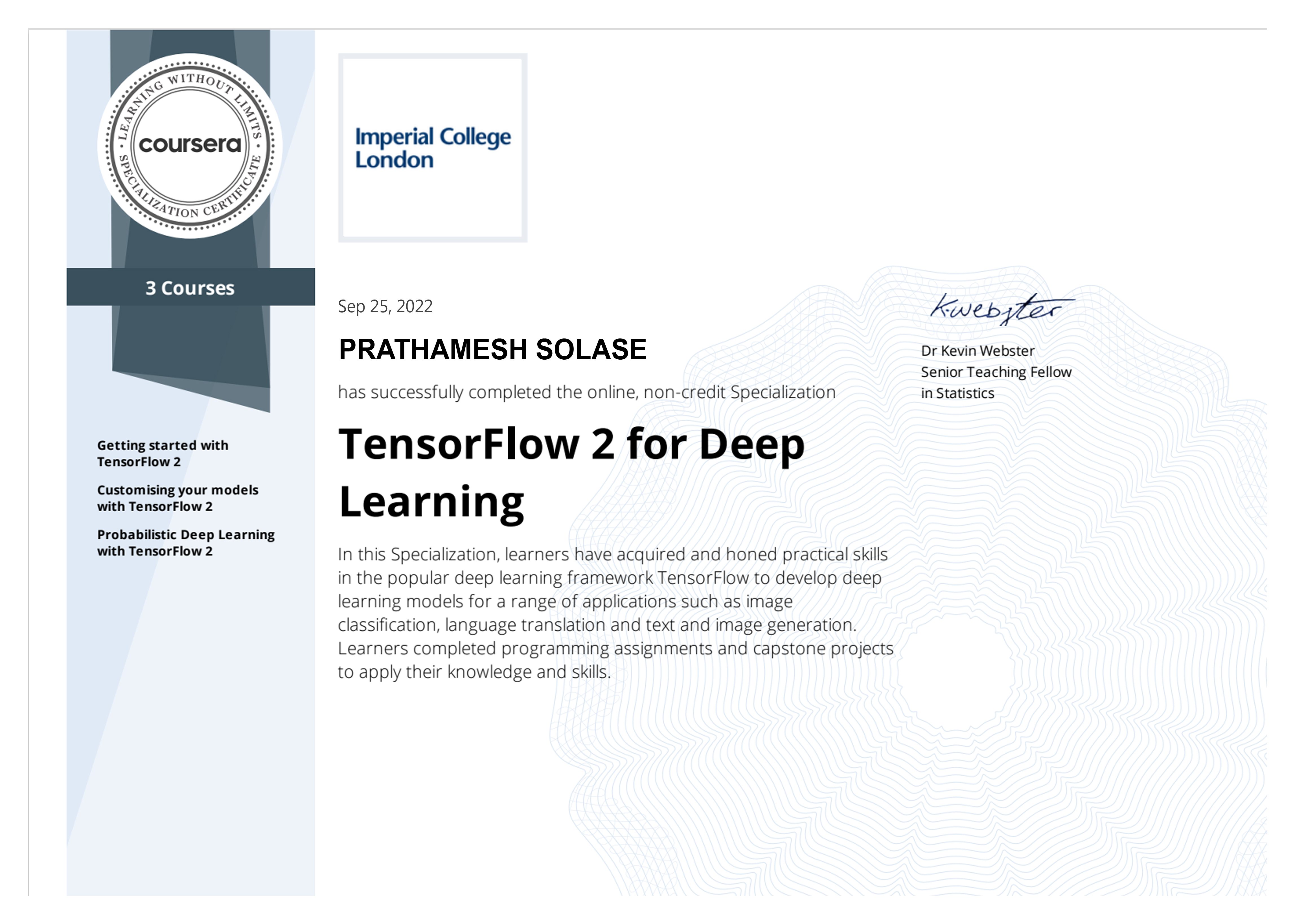
Imperial College TensorFlow for Deep Learning Certificate

Imperial College London – TensorFlow 2 for Deep Learning

Topics learned:

  • TensorFlow 2 fundamentals
  • Image classification with CNNs
  • Text processing & NLP models
  • Sequence models & attention
  • Generative models (text and image)
  • End-to-end model deployment techniques
Key outcome: Hands-on experience building and tuning deep learning models in TensorFlow, including real projects and capstones.
Completed: 2022 Imperial College London
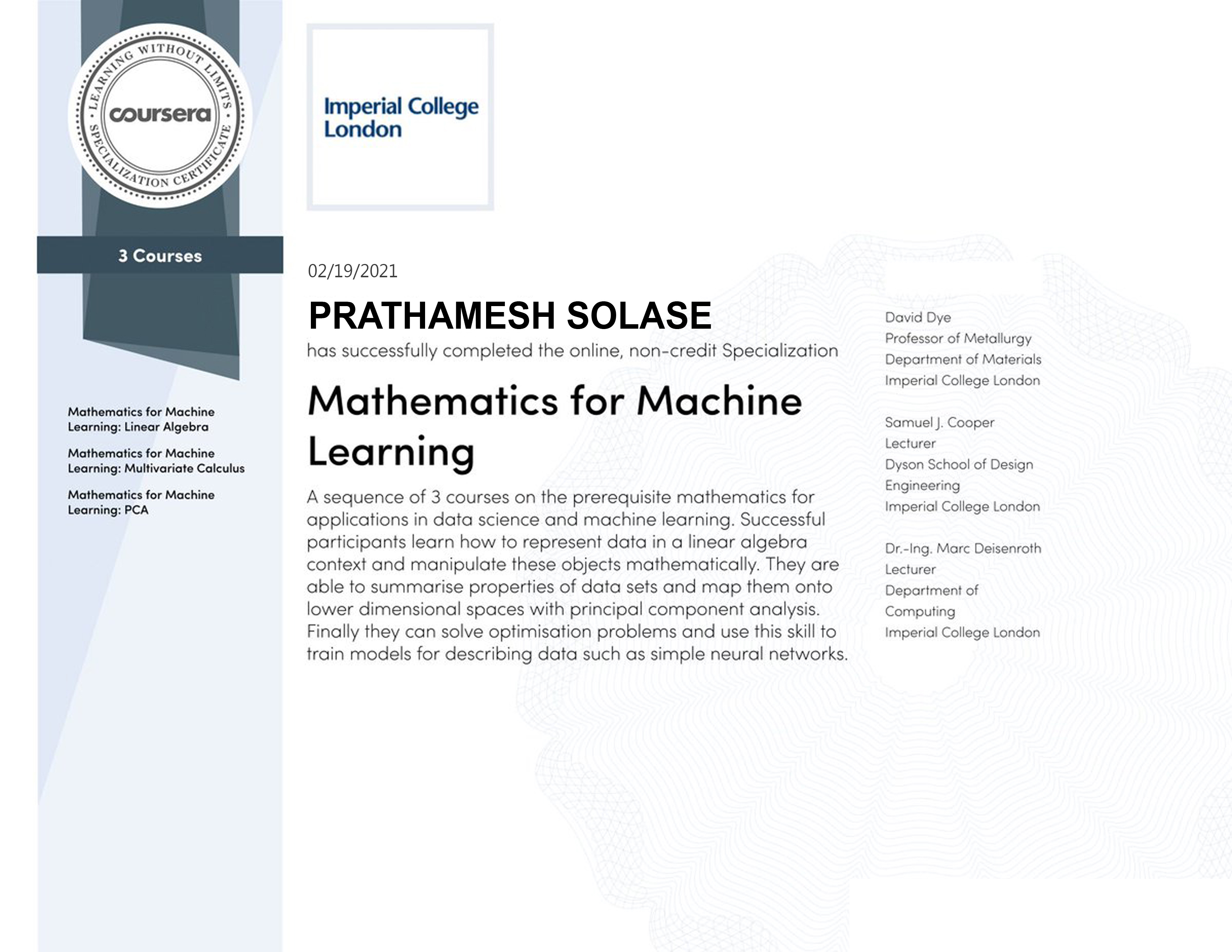
Imperial College Mathematics for ML Certificate

Imperial College London – Mathematics for Machine Learning

Topics learned:

  • Linear algebra (vectors, matrices, eigenvalues, projections)
  • Multivariable calculus (gradients, optimization)
  • Dimensionality reduction with PCA
  • Mathematical structure behind ML algorithms
Key outcome: Understood how ML algorithms work mathematically, enabling better debugging, optimization, and model interpretation.
Completed: 2021 Imperial College London